
The Japanese Tea Garden in Golden Gate Park is the oldest public Japanese garden in the United States. It began as a Japanese Village exhibit for the 1894 California Midwinter International Exposition and was developed for decades by Makoto Hagiwara and his family. Today its five acres of winding paths, ponds, stone lanterns and pagodas make it one of the most peaceful places in the city.
Quick answer
The Japanese Tea Garden in Golden Gate Park is the oldest public Japanese garden in the United States, created for the 1894 Midwinter Fair. Plan about an hour to see the drum bridge, five-story pagoda, koi ponds, Zen garden and bronze Buddha, then have tea and snacks at the tea house. Go early in the morning for fewer crowds, and visit in late March or early April for cherry blossoms.
In this guide
This guide is part of our San Francisco attractions hub. See our Golden Gate Park guide for the rest of the park.
What to see

- The drum bridge: a steeply arched wooden bridge that makes a full circle with its reflection. Climbing it is part of the fun.
- The pagoda: a five-tiered pagoda brought from the 1915 Panama-Pacific Exposition.
- The bronze Buddha: a large seated Buddha cast in Japan in 1790.
- The Zen garden: a dry garden of raked gravel and stones.
- Koi ponds, stone lanterns, a waterfall and carefully pruned trees.
The tea house
Stop at the tea house for green tea and Japanese snacks with a view over the ponds. The Hagiwara family is often credited with introducing the fortune cookie to America here in the early 1900s, and they are still served.
Tickets and hours
Admission is charged for most visitors, with discounts for San Francisco residents, seniors and children. Entry has been free for everyone on certain weekday mornings before 10am. The garden is open daily, closing earlier in winter than in summer. Check the official site for current prices and free hours.
Best times to visit
Go early in the morning for quiet paths and soft light, or on a weekday. Late March and early April bring cherry blossoms, and fall has colorful maples. Rainy days are atmospheric and less crowded. Allow about an hour.
Getting there
The garden is next to the de Young Museum on the Music Concourse in the eastern part of Golden Gate Park. Take the N Judah to Ninth Avenue or the 44 bus, or park in the Music Concourse garage. Combine it with the California Academy of Sciences across the plaza.
Official resources: Japanese Tea Garden, San Francisco Recreation and Parks.
The Hagiwara family
The garden began as a Japanese Village exhibit at the California Midwinter International Exposition of 1894. Afterward, Japanese gardener Makoto Hagiwara was hired to care for it, and he and his family expanded it over the following decades, living in a house on the grounds. Hagiwara is often credited with introducing the fortune cookie to America, serving them at the tea house in the early 1900s.
In 1942, during World War II, the Hagiwara family was forced to leave and was sent to an incarceration camp along with other Japanese Americans. Their home was torn down, and the garden was renamed for a time. A plaque and a stone near the garden now honor the family’s contribution.
Features to look for
- The drum bridge, a steeply arched wooden bridge whose reflection in the water forms a circle
- The five-story pagoda, originally built for the 1915 Panama-Pacific International Exposition
- A large bronze Buddha, cast in Japan in 1790 and given to the garden in the 1940s
- The Zen garden, a dry landscape of raked gravel and stones
- Koi ponds, stone lanterns, waterfalls and carefully pruned trees
- The Lantern of Peace, given by Japanese children in the 1950s as a gesture of friendship
Seasons in the garden
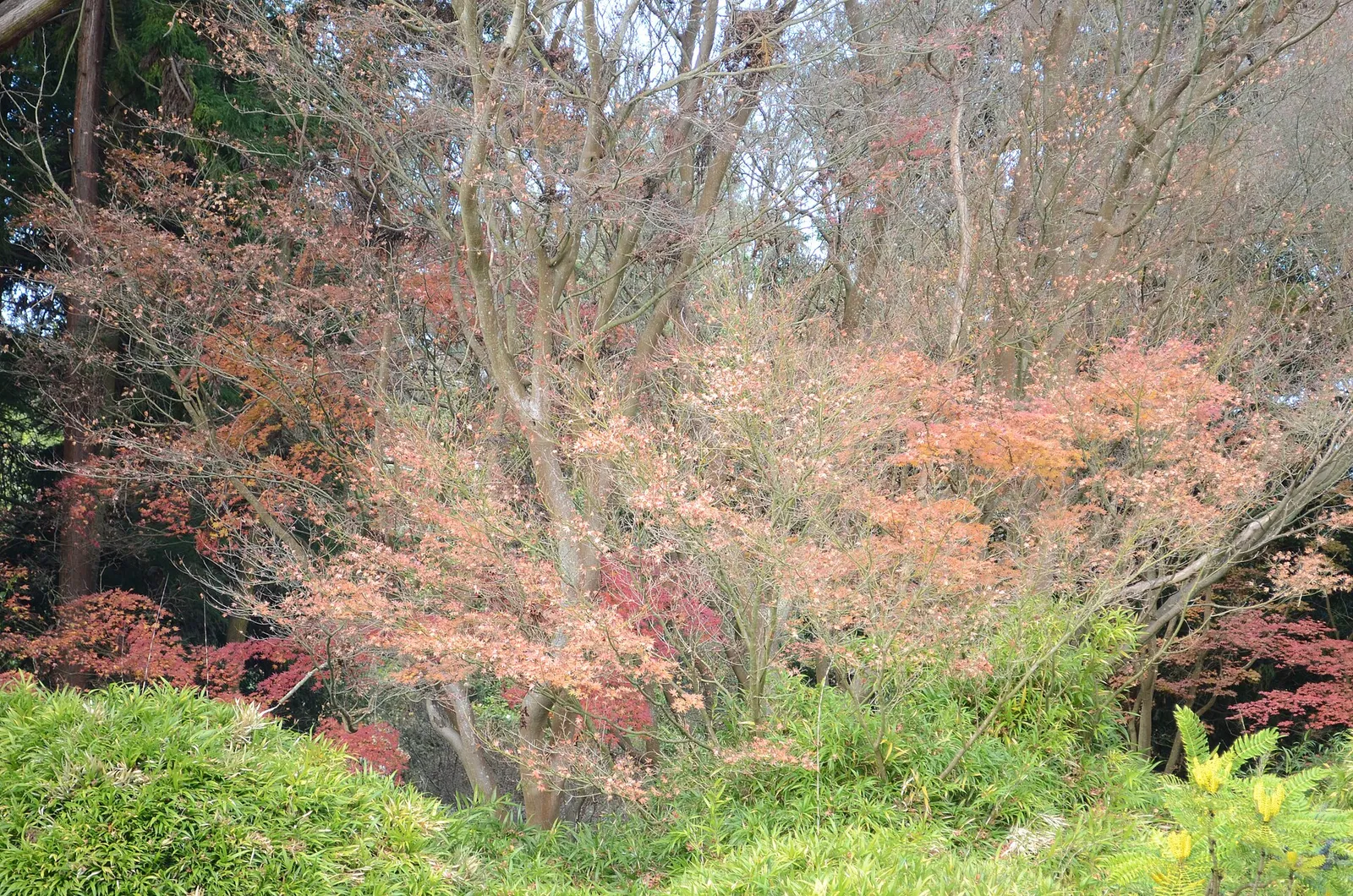
The garden changes through the year. Cherry blossoms usually bloom from late March into April, and azaleas follow in spring. Summer is green and lush, though often foggy. In fall, Japanese maples turn red and orange, especially in November. Winter is quiet, with bare branches and mossy stones, and fewer visitors.
Photography tips
The drum bridge and pagoda are the most photographed spots. Early morning light is soft, and you are more likely to get a clear shot without crowds. On foggy days, the garden looks moody and atmospheric. Paths are narrow, so be mindful of other visitors, and avoid stepping off the paths for a better angle.
Visiting with kids
Kids enjoy spotting koi and climbing the drum bridge, which is steep, so hold small hands. Strollers can be tricky on some narrow paths and steps. The visit is short enough for young children, and the de Young and California Academy of Sciences are right next door. See our San Francisco with kids guide.
Combining with nearby sights
The Japanese Tea Garden is in the museum area of Golden Gate Park. Next door are the de Young, whose tower has a free observation deck, the California Academy of Sciences and the Music Concourse. The Conservatory of Flowers and the San Francisco Botanical Garden are a short walk away.
Etiquette
The garden is meant to be peaceful. Keep voices low, stay on paths, do not feed the koi and do not climb on stones or lanterns. Picnics are not allowed inside the garden, but you can eat at the tea house or on the lawns outside. For more Japanese culture, visit Japantown.
Frequently asked questions
How much is the Japanese Tea Garden in San Francisco?
There is an admission fee for most visitors, with discounts for SF residents, seniors and kids. Check the official site for current prices.
Is the Japanese Tea Garden free?
It has been free for everyone on certain weekday mornings before 10am. Check before you go.
How long do you need at the Japanese Tea Garden?
About an hour is enough to walk the paths and have tea.
When do cherry blossoms bloom in the Japanese Tea Garden?
Usually from mid-March to early April.
Who created the Japanese Tea Garden?
The garden began as an exhibit for the 1894 Midwinter Fair and was expanded by Japanese gardener Makoto Hagiwara and his family, who cared for it until 1942.
Is the fortune cookie from the Japanese Tea Garden?
Makoto Hagiwara is often credited with introducing fortune cookies in America at the garden’s tea house in the early 1900s, though the cookie’s exact origin is debated.
When do the maples change color in the Japanese Tea Garden?
Japanese maples usually turn red and orange in late October and November.
Can you picnic in the Japanese Tea Garden?
Picnics are not allowed inside the garden, but you can eat at the tea house or on the lawns elsewhere in Golden Gate Park.
Photo credits
Featured image: King of Hearts / Wikimedia Commons, CC BY-SA 4.0; The tea house: Ana Raquel S. Hernandes from Sao Paulo, Brazil / Wikimedia Commons, CC BY-SA 2.0.