
The Conservatory of Flowers is the white, wedding-cake glasshouse on the northern edge of Golden Gate Park. Opened in 1879, it is the oldest building in the park and one of the oldest public conservatories of its kind in North America. Inside, warm, humid galleries hold more than a thousand species of tropical plants, from towering palms to rare orchids and giant water lilies.
Quick answer
The Conservatory of Flowers is a Victorian glass greenhouse in Golden Gate Park, opened in 1879 and one of the oldest of its kind in North America. Inside are rare tropical plants, orchids, giant water lilies and a rotating special exhibit. Plan 45 minutes to an hour. Combine it with the Dahlia Garden outside, the Japanese Tea Garden and the museums nearby.
In this guide
This guide is part of our San Francisco attractions hub. See our Golden Gate Park guide for the rest of the park.
The building
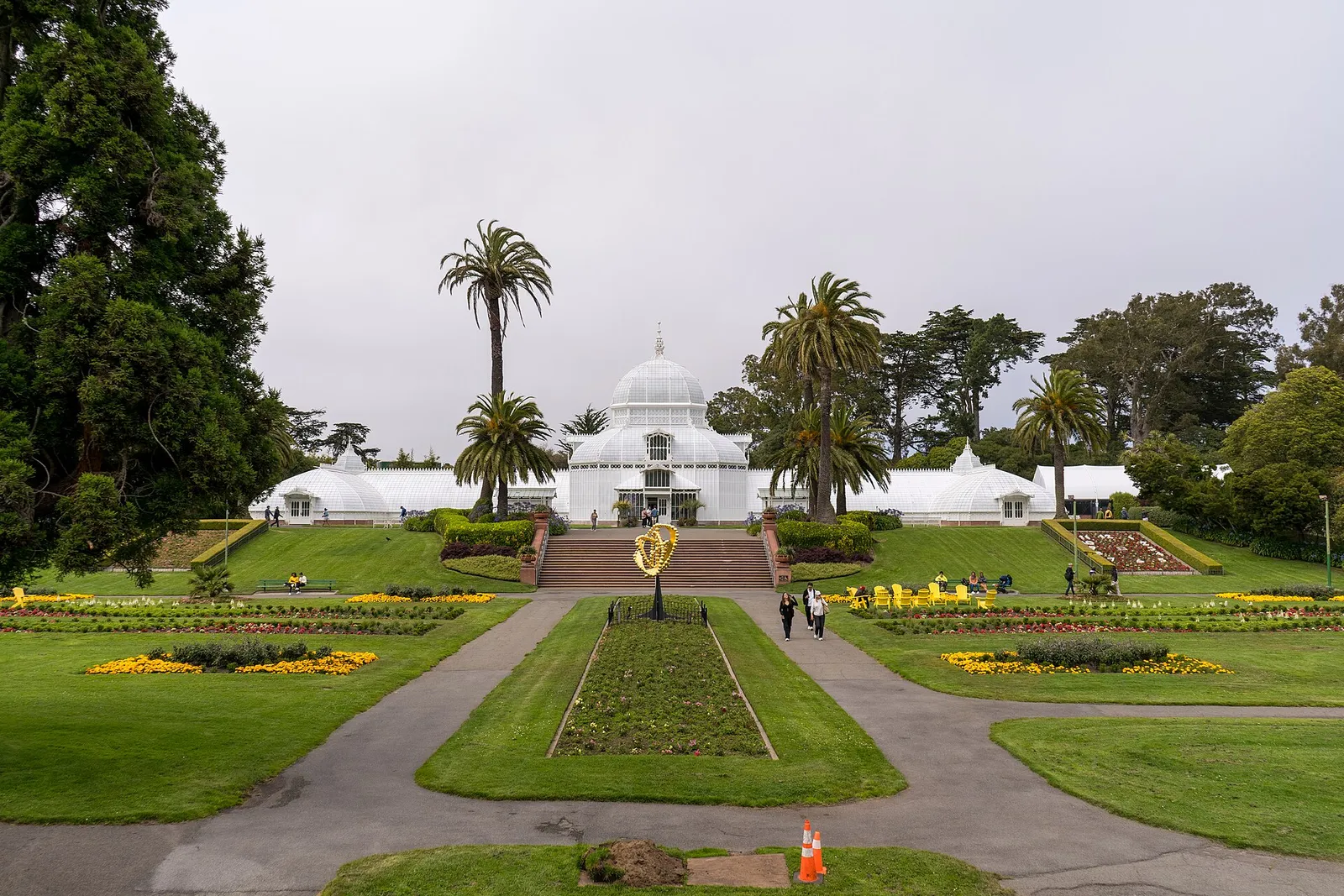
The Victorian structure is made of wood and glass, with a soaring central dome. It has survived earthquakes, fires and a damaging storm in 1995, after which it was restored and reopened in 2003. The flower beds on the lawn in front are planted in seasonal designs and are free to enjoy.
What you will see inside

- Lowland Tropics: towering palms, a canopy of rainforest plants and the warm, humid air of a jungle.
- Highland Tropics: cool cloud-forest plants and one of the best orchid collections in the country.
- Aquatic Plants: ponds with giant water lilies and carnivorous plants.
- Potted Plants: a gallery of plants once collected by Victorian enthusiasts.
- Special exhibits: a changing gallery, often with seasonal shows and model train displays in winter.
Tickets and hours
There is an admission fee for most visitors, with discounts for San Francisco residents, seniors, students and children. Entry is free on the first Tuesday of the month. The conservatory is usually closed on Mondays. Check the official site for current hours and prices.
Tips
Allow about an hour. Cameras fog up when you first come in from the cool outdoors, so give them a minute. It is a great rainy-day stop. Combine it with the nearby Dahlia Garden, which blooms from summer to fall, and a walk across the park to the de Young and Japanese Tea Garden.
Getting there
The conservatory is on John F. Kennedy Drive near the park’s eastern end. Take the 5 or 5R Fulton bus to Arguello Boulevard, or the 7 or 33 bus to the park’s east side and walk in.
Official resources: Conservatory of Flowers, San Francisco Recreation and Parks.
The galleries inside
The Conservatory is laid out as a series of connected galleries, each with its own climate:
- Lowland Tropics, a warm, humid jungle of palms, giant leaves and climbing vines under the central dome
- Highland Tropics, a cooler, misty cloud-forest room known for its large orchid collection
- Aquatic Plants, where tropical water lilies, including giant lily pads, float in warm ponds
- Potted Plants, with colorful displays of flowering plants and unusual specimens
- A special exhibits gallery that changes regularly, often with a family-friendly theme
Signs explain where each plant comes from and how it is used, and staff and volunteers are often around to answer questions.
Seasonal highlights
The Conservatory changes through the year. The special exhibits gallery has hosted butterfly displays, carnivorous plants and art installations, and in winter it is known for a holiday display with model trains running through miniature scenes. Rare blooms, like the famously smelly corpse flower, draw crowds when they open, so watch the Conservatory’s announcements.
Outside, the Dahlia Garden in the dell next to the building blooms from roughly summer into fall. The dahlia is San Francisco’s official flower, and the garden is free to visit.
Photography tips
The white glass building is one of the most photographed spots in Golden Gate Park. For the classic shot, stand on the lawn in front of the Conservatory, with the flower beds in the foreground. Morning light is soft and the lawn is quiet. Inside, humidity can fog camera lenses, so give your camera a few minutes to adjust when you enter. Tripods may be restricted, so check the rules.
A short history
The Conservatory’s glass and wooden frame was originally bought by James Lick, a wealthy San Francisco businessman, but he died before it was built. Local business leaders bought the kit and donated it to the city, and it opened in Golden Gate Park in 1879. It survived fires and the 1906 earthquake, was badly damaged by a storm in 1995 and reopened in 2003 after a major restoration.
Combining your visit
The Conservatory sits at the eastern end of Golden Gate Park, near John F. Kennedy Drive. A full day nearby could include the California Academy of Sciences, the de Young, the Japanese Tea Garden and the San Francisco Botanical Garden. JFK Drive through this part of the park is closed to cars, which makes it pleasant for walking and biking. Our bike rental guide has tips.
Visiting with kids
Kids usually enjoy the jungle feel of the Lowland Tropics and the giant water lilies. The special exhibits gallery is often designed with families in mind. Strollers can be tricky in narrow paths, so a carrier may be easier for small children. See our San Francisco with kids guide for more ideas in the park.
Weather and timing
The Conservatory is a great rainy-day option, because you are warm and dry inside. On foggy summer days, the humid galleries are a welcome change from the cool air outside. Weekends and free days are busier, so visit on a weekday morning for a quieter experience.
Frequently asked questions
How old is the Conservatory of Flowers?
It opened in 1879, making it the oldest building in Golden Gate Park.
Is the Conservatory of Flowers free?
It is free on the first Tuesday of each month. Otherwise there is an admission fee.
How long do you need at the Conservatory of Flowers?
About an hour.
Is the Conservatory of Flowers open on Mondays?
It is usually closed on Mondays.
What is inside the Conservatory of Flowers?
The Conservatory has galleries of lowland and highland tropical plants, a large orchid collection, aquatic plants including giant water lilies, potted plant displays and a rotating special exhibit.
What is the Dahlia Garden in Golden Gate Park?
The Dahlia Garden is a free garden in the dell next to the Conservatory of Flowers, filled with hundreds of dahlias that bloom from roughly summer into fall. The dahlia is San Francisco’s official flower.
Is the Conservatory of Flowers good for kids?
Yes. Children usually enjoy the jungle-like tropical rooms, the giant lily pads and the special exhibits, many of which are designed for families.
Is the Conservatory of Flowers a good rainy-day activity?
Yes. The galleries are warm, humid and indoors, which makes the Conservatory a good choice on rainy or foggy days in Golden Gate Park.
Photo credits
Featured image: Kefr4000 / Wikimedia Commons, CC BY-SA 4.0; What you will see inside: Daderot / Wikimedia Commons, CC0.