A Monterey and Carmel day trip from San Francisco takes about two to two and a half hours of driving each way, and it’s worth the early start. Spend the morning at the Monterey Bay Aquarium on Cannery Row, then drive 17-Mile Drive or head straight to Carmel-by-the-Sea for the white sand beach and a walk at Point Lobos before heading home. Here’s how to plan it, with prices as of November 2026.
In this guide
For more trips out of the city, see our San Francisco visitors guide.
At a glance
| Details (as of November 2026) | |
|---|---|
| Distance | About 115 to 125 miles to Monterey, depending on route |
| Drive time | About 2 to 2.5 hours each way without heavy traffic |
| Monterey Bay Aquarium | $65 adults 18 to 69, $50 youth 5 to 17 and seniors 70 and up, free 4 and under |
| 17-Mile Drive | Gate fee reported at $12.50 per vehicle |
| Point Lobos | $10 per car, $9 with a senior. Opens at 8 am |
| Carmel Beach | Free |
| Best for | Ocean lovers, families, a scenic coastal drive |
Getting there
Driving routes
The fastest route is usually US-101 south through the Peninsula and San Jose, then Highway 156 west and Highway 1 south into Monterey. It’s mostly freeway.
The scenic route follows Highway 1 down the coast through Pacifica, Half Moon Bay and Santa Cruz. It’s slower, often by an hour or more, but the ocean views make it a trip in itself. A good plan is to take 101 down in the morning to save time, then come back up Highway 1 if you have daylight to spare, or the other way around.
Traffic around San Jose and on Highway 17 near Santa Cruz can be heavy on weekday rush hours and summer weekends. Leaving San Francisco by 7 am helps a lot.
Without a car
Getting to Monterey by public transit takes much longer, with a mix of train and bus connections, so it’s hard to do as a day trip. Organized tours from San Francisco are another option. If you’d rather stay closer, our Sausalito day trip and Muir Woods guide cover easier trips.
Monterey Bay Aquarium
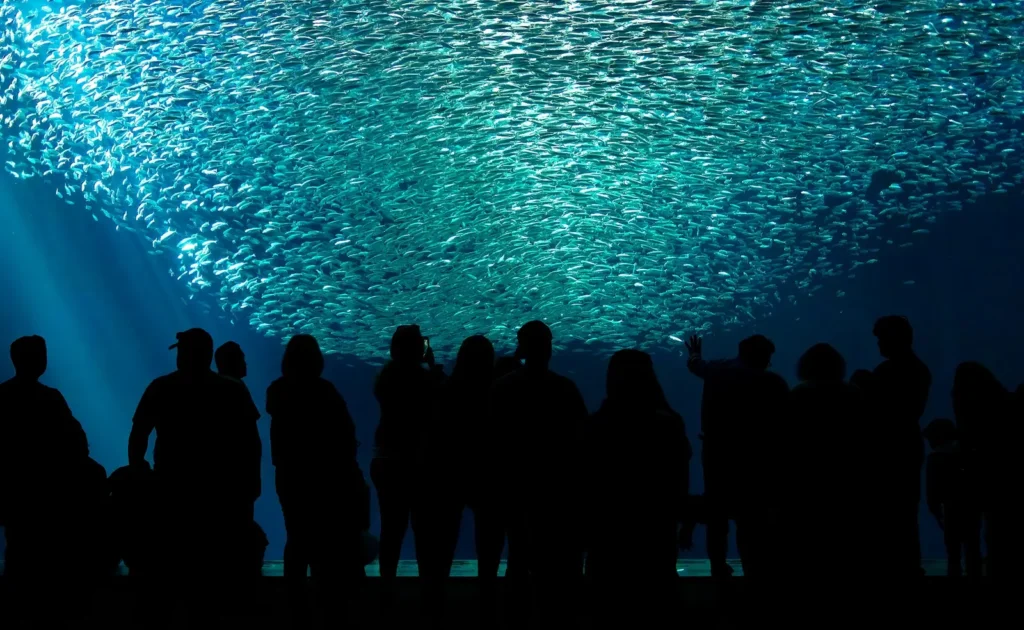
The Monterey Bay Aquarium, at 886 Cannery Row, is one of the best aquariums in the country and the main reason many people make this trip. It sits right on the bay, and many of its exhibits show the animals that live just offshore.
Tickets and hours
As of November 2026, the aquarium’s ticket page lists tickets at $65 for adults 18 to 69, $50 for youth 5 to 17, $50 for seniors 70 and up, and free for kids 4 and under, for visits through December 31, 2026. Buy tickets in advance on the aquarium’s own website. The aquarium says it doesn’t partner with third parties to sell tickets and doesn’t offer discounts, so be wary of any site that claims to.
Tickets aren’t refundable, but you can exchange general admission tickets for another date until 4 pm Pacific time on the day of your visit, according to the visitor FAQs. Last entry is one hour before closing, and you can get a hand stamp to leave and come back the same day. Hours vary by season, so check the daily schedule before you go.
Adults who receive SNAP/CalFresh benefits can get free admission for themselves and up to three guests by showing their EBT card and a matching photo ID at the main entrance.
What to see
- Kelp Forest. A towering tank of swaying kelp and fish, with diver feedings on the daily schedule.
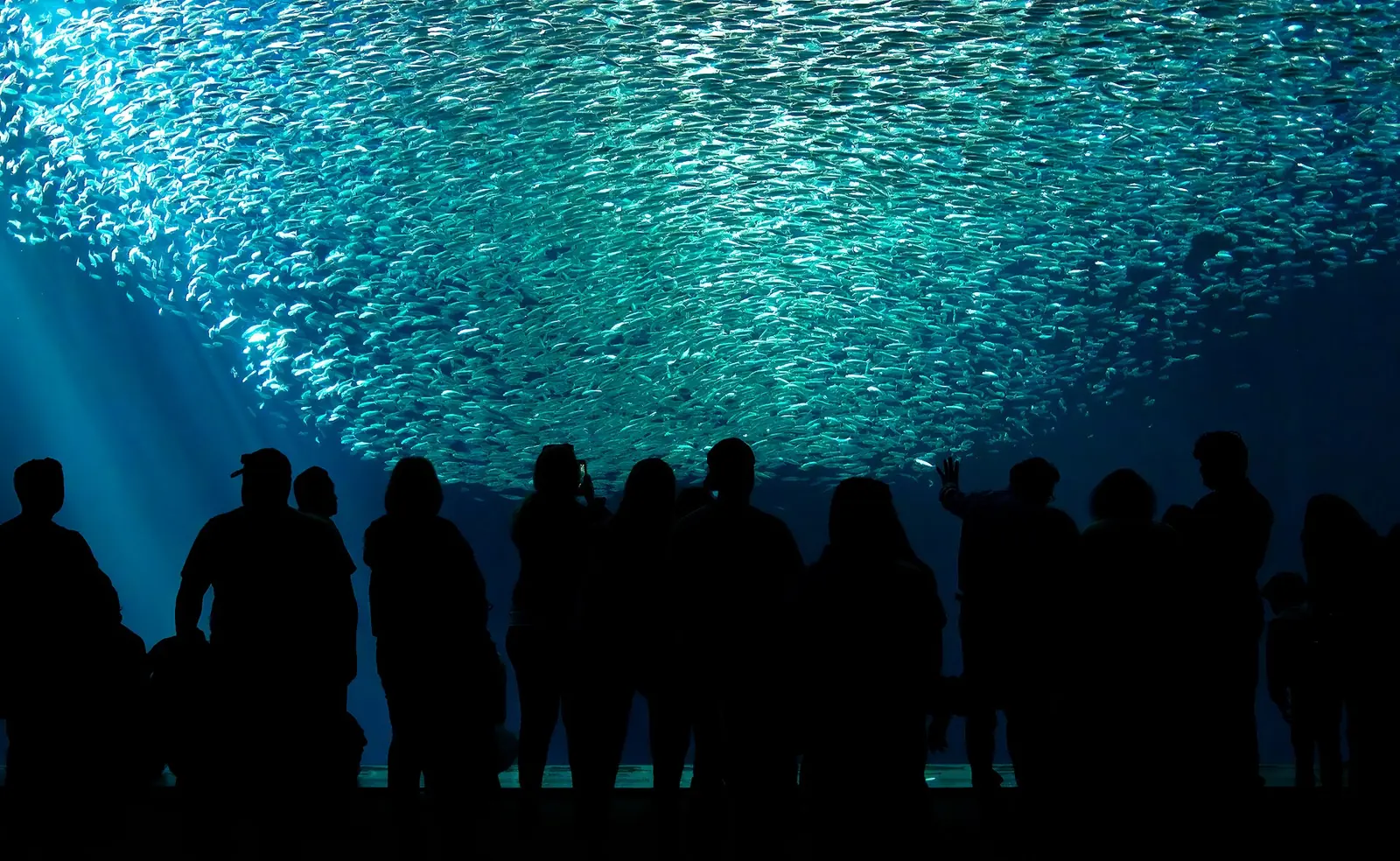
- Open Sea. A huge tank with a swirling school of sardines, tuna, sharks and other open ocean animals.
- Sea otters. The otter feedings are among the most popular events. Check the schedule for times.
- Jellies. Glowing jellyfish exhibits that are hard to walk away from.
- Touch pools. Hands-on tide pool exhibits that kids love.
Plan three to four hours. Arrive near opening time, because the aquarium gets crowded by late morning, especially on weekends and holidays. Paid behind-the-scenes tours are also on the schedule.
Cannery Row
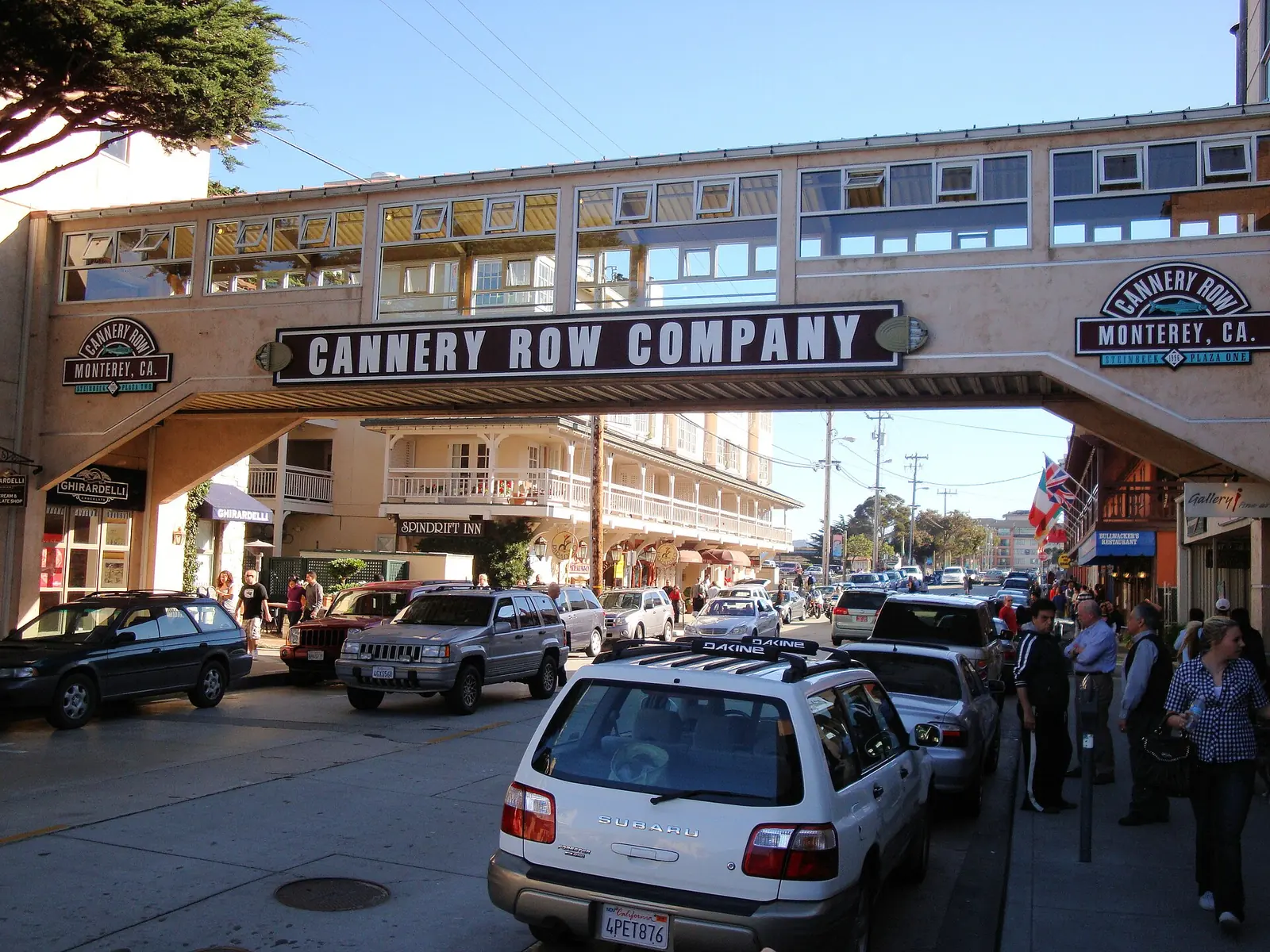
The aquarium sits at the end of Cannery Row, the waterfront street once lined with sardine canneries and made famous by John Steinbeck’s 1945 novel of the same name. The sardine industry collapsed in the mid-1900s, and the old cannery buildings now hold restaurants, shops, hotels and wine tasting rooms.
It’s an easy place to find lunch after the aquarium. The Monterey Bay Coastal Recreation Trail runs along the waterfront, so you can walk or rent a bike and head toward Old Fisherman’s Wharf or Pacific Grove.
Pacific Grove
Just west of Cannery Row, Pacific Grove is a quiet Victorian town with a beautiful rocky shoreline. Ocean View Boulevard follows the coast past tide pools and viewpoints, and Lovers Point is a favorite spot for a picnic. Monarch butterflies spend the winter in Pacific Grove, usually from about October through February, at the Monarch Grove Sanctuary. Numbers vary a lot from year to year.
17-Mile Drive
17-Mile Drive is a scenic private road through Pebble Beach, linking Pacific Grove and Carmel. It winds past golf courses, mansions, rocky coves and the famous Lone Cypress, a lone tree on a granite outcrop above the sea.
Pebble Beach charges a gate fee per vehicle, reported at $12.50 as of fall 2026. Several travel guides note that the fee is reimbursed with a qualifying purchase at Pebble Beach resort restaurants. Check the Pebble Beach site for current rules. The road is marked with a dashed red line, so you won’t need a map. Plan about an hour with stops. Motorcycles aren’t allowed on the drive, according to several guides that cite Pebble Beach’s rules.
Carmel-by-the-Sea
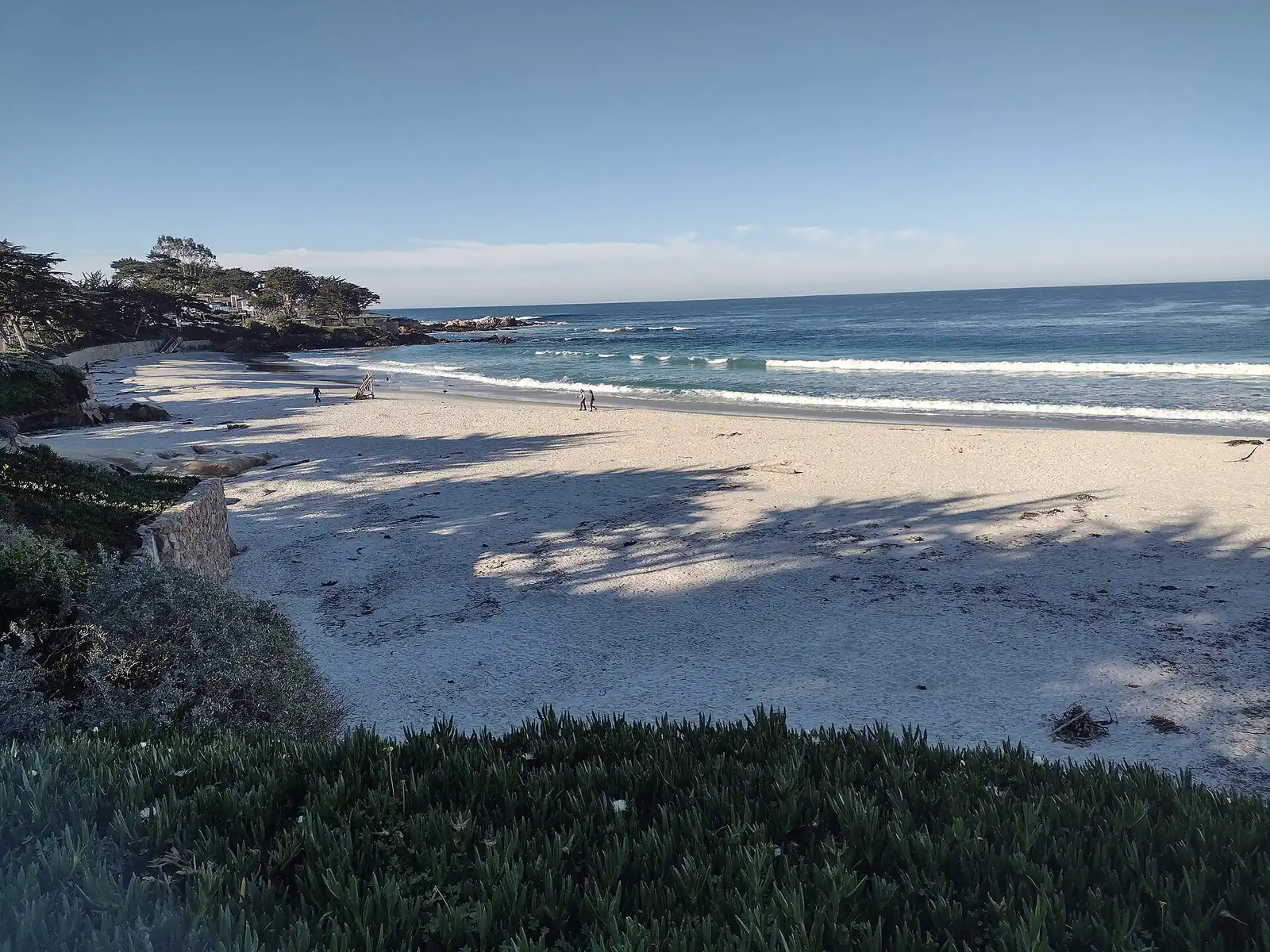
Carmel-by-the-Sea is a small, very walkable town of cottages, galleries, shops and restaurants, just south of Monterey. Ocean Avenue runs downhill through town straight to Carmel Beach, a wide crescent of fine white sand backed by cypress trees.
The beach is free and one of the most beautiful on the central coast. It’s popular with dog owners. The water is cold and the surf can be strong, so it’s better for walking and sunsets than swimming.
Downtown streets have free time-limited parking, and there are lots nearby. Read the signs carefully, since enforcement is strict.
Carmel Mission, officially Mission San Carlos Borromeo de Carmelo, is on the south side of town. It’s one of California’s most beautiful missions and the burial place of Father Junípero Serra. Check its website for visiting hours and admission.
Point Lobos State Natural Reserve
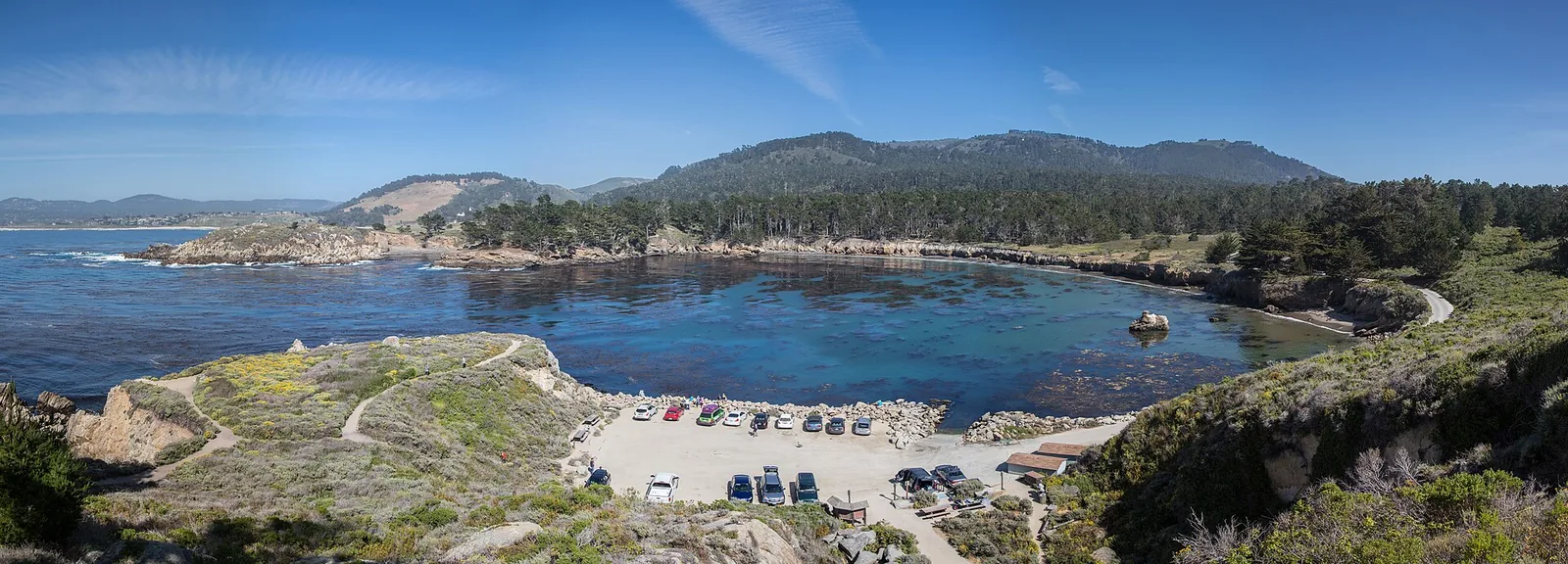
Point Lobos, about three miles south of Carmel on Highway 1, is often called one of the most beautiful spots on the California coast. Trails follow rocky coves with clear green water, cypress groves, sea lions, harbor seals, sea otters and, in season, migrating whales offshore.
Hours and fees
As of November 2026, the Point Lobos Foundation lists the reserve as opening at 8 am and closing at 5 pm, with last entry at 4:30 pm. Some sources list later summer hours, so check California State Parks for the current schedule. Entry costs $10 per passenger car, $9 for a vehicle with a senior and $5 with a disabled discount card.
Parking
Parking inside the reserve is limited to about 150 vehicles, and on busy days you’ll wait at the gate for a spot. The foundation suggests arriving before 9:30 am or after 3 pm. If you park along Highway 1, use only legal pullouts and park fully off the road. Vehicles over 21 feet long aren’t allowed inside.
Rules
Dogs aren’t allowed anywhere in the reserve, not even inside parked cars. Drones are prohibited. Stay on the trails, since the reserve protects fragile habitat.
Trails to try
The Cypress Grove Trail is a short loop through rare Monterey cypress trees above the ocean. The Bird Island Trail leads to views of a rocky island covered with seabirds and beaches with turquoise water. The Sea Lion Point Trail heads out to rocks where sea lions gather. Whalers Cove has a small cabin museum, open as staffing permits.
A sample day
- 7 am: Leave San Francisco and take US-101 south.
- 9:30 am: Arrive at the Monterey Bay Aquarium.
- 1 pm: Lunch on Cannery Row.
- 2:15 pm: Drive Ocean View Boulevard through Pacific Grove and 17-Mile Drive.
- 3:30 pm: Walk Carmel Beach and Ocean Avenue.
- 4 pm: Short walk at Point Lobos, if you can make last entry.
- 5:30 pm: Dinner in Carmel, then drive back to the city.
You can’t fit everything comfortably into one day. If Point Lobos is a priority, go there first thing in the morning and visit the aquarium in the afternoon instead. Many people turn this into an overnight trip.
Tips for the trip
Watch the weather
The Monterey Peninsula often has fog, especially in summer. California State Parks notes fog from July through September at Point Lobos. Fall is often the sunniest season. Bring layers, as you would in San Francisco. Our what to pack for San Francisco guide works here too.
Book the aquarium ahead
Buying aquarium tickets in advance online saves time at the door, especially on weekends and holidays.
Gas up
Fill your tank before 17-Mile Drive and Point Lobos. There are gas stations in Monterey and Carmel.
Avoid the late afternoon rush
If you can, start the drive back after evening rush hour, or plan dinner on the way home to let traffic clear.
Other day trips from San Francisco
If wine country appeals more, our Napa Valley day trip and Sonoma day trip guides cover the drive north. Continuing down the coast to Southern California? Our sister site Los Angeles Updates covers what to do when you get there.
Frequently asked questions
How long is the drive from San Francisco to Monterey?
It’s about two to two and a half hours each way via US-101 without heavy traffic. The coastal route on Highway 1 takes longer but is much more scenic.
How much are Monterey Bay Aquarium tickets?
As of November 2026, tickets are $65 for adults 18 to 69, $50 for youth 5 to 17 and seniors 70 and up, and free for kids 4 and under, for visits through December 31, 2026. Buy them on the aquarium’s website.
Is a Monterey and Carmel day trip from San Francisco worth it?
Yes, if you start early. You can see the aquarium, Cannery Row and Carmel in one day. Adding 17-Mile Drive and Point Lobos makes for a long day, so many visitors stay overnight.
Does 17-Mile Drive cost money?
Yes. Pebble Beach charges a gate fee per vehicle, reported at $12.50 as of fall 2026. Check the Pebble Beach website for the current fee.
How much does it cost to enter Point Lobos?
As of November 2026, entry is $10 per passenger car, $9 for a vehicle with a senior and $5 with a disabled discount card. Parking is limited, so arrive early.
Photo credits
Featured image: Rhododendrites / Wikimedia Commons, CC BY-SA 4.0; Cannery Row in Monterey: Jim G from Silicon Valley, CA, USA / Wikimedia Commons, CC BY 2.0; Carmel Beach: Mutante / Wikimedia Commons, CC BY-SA 3.0; Whaler's Cove at Point Lobos: Diliff / Wikimedia Commons, CC BY-SA 3.0.