
Mission Dolores, at 16th and Dolores Streets, is the oldest intact building in San Francisco, a small adobe chapel finished in 1791 that survived both the 1906 and 1989 earthquakes. You can walk through the chapel, a small museum, the cemetery garden and the much larger basilica next door on a self-guided visit, with no reservation needed. As of November 2026, it’s open daily from 10 am, and the mission lists a suggested donation of $10 for adults and $5 for students.
In this guide
This guide is part of our San Francisco attractions hub.
At a glance
| Details (as of November 2026) | |
|---|---|
| Address | 3321 16th Street, at Dolores Street |
| Hours | Monday to Friday 10 am to 4 pm, Saturday and Sunday 10 am to 5 pm |
| Cost | Suggested donation of $10 for adults and $5 for students |
| Tours | Self-guided only. Docent tours are unavailable until further notice |
| What you’ll see | The Old Mission chapel, museum, cemetery garden, basilica and gift shop |
| Time needed | 45 minutes to an hour |
| Phone | (415) 621-8203 |
| Getting there | Muni 22 Fillmore, J Church or 16th Street Mission BART |
A quick history
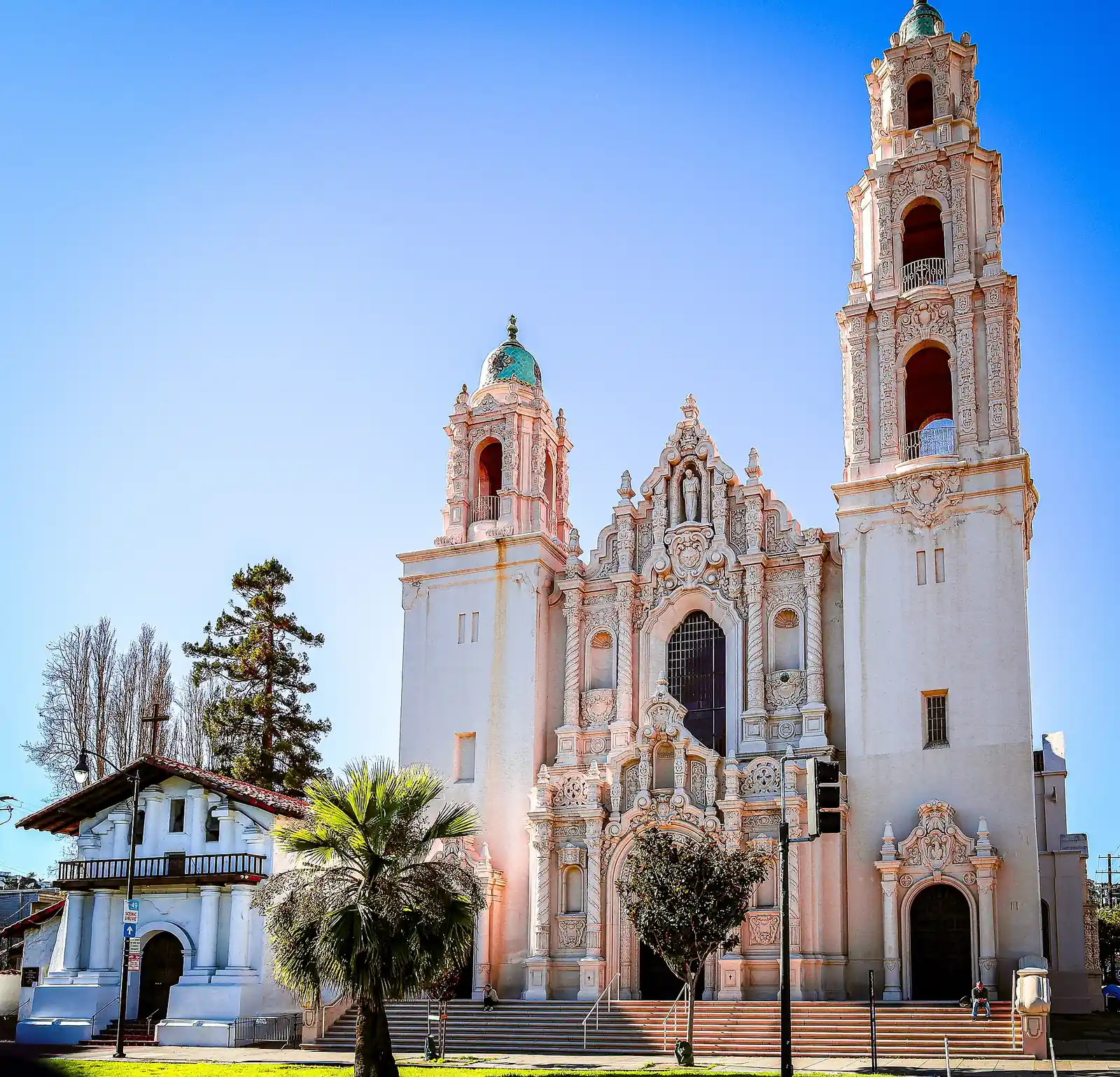
Mission Dolores’s official name is Mission San Francisco de Asís, named for Saint Francis of Assisi. The city itself took its name from the mission and the nearby presidio. It was founded in 1776 by Spanish missionaries as the sixth of the 21 California missions, the same year the American colonies declared independence. Its nickname comes from a nearby creek and lagoon the Spanish called Laguna de los Dolores.
The chapel you see today, known as the Old Mission, was completed in 1791. It was built with adobe bricks by Ohlone and other Native Californian laborers living at the mission. Its thick walls have held up through more than two centuries of earthquakes, including the 1906 earthquake and fire, which destroyed much of the city around it.
The mission’s history is painful, too. Like the other California missions, it brought Native people into a system of forced labor and religious conversion, and thousands died from disease. The mission’s own site notes that the cemetery is the final resting place of many Ohlone, Miwok and other First Californians. Today’s curator, Andrew A. Galvan, is listed on the mission’s site, and the mission’s exhibits address this history.
The large church next door, the Mission Dolores Basilica, was built in the early 20th century after the 1906 earthquake badly damaged an earlier brick church on the site. Its Spanish Colonial Revival style, with twin towers and ornate details, is a big contrast to the plain adobe chapel beside it.
What to see inside
The Old Mission chapel
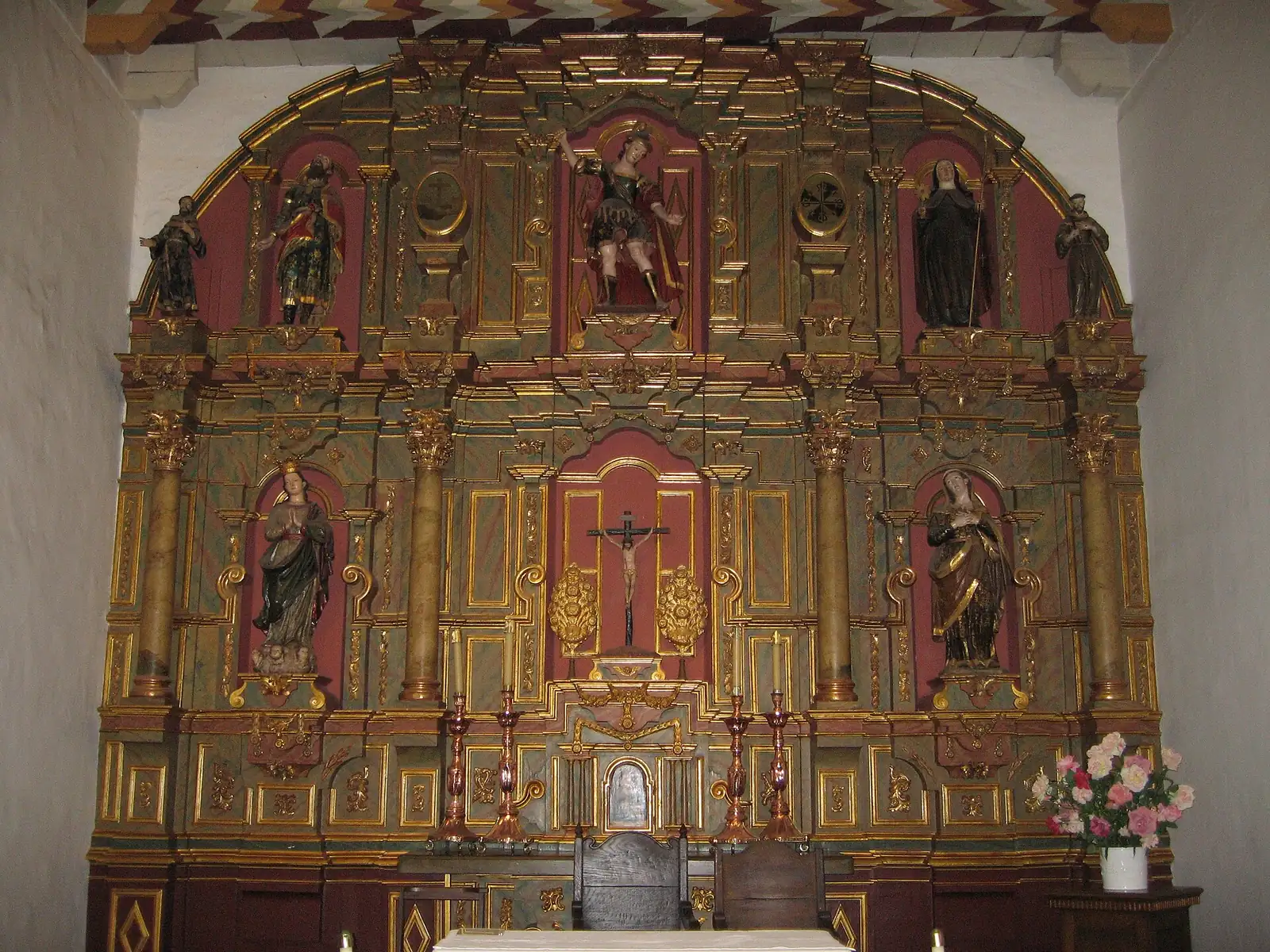
The chapel is small, long and narrow, with whitewashed adobe walls. Look up as soon as you walk in. The ceiling is painted with patterns in red, ochre and other earth tones, based on designs by Ohlone artists. It’s easy to miss if you head straight for the altar.
The carved and painted altar pieces at the front were brought from Mexico in the mission period. Side altars and religious statues line the walls. The chapel is still used for Mass, including weekday Masses at 8 am, Monday through Saturday, so be respectful if a service is happening and avoid visiting during Mass times.
The museum
A small museum in the complex holds artifacts from the mission’s early years, documents and exhibits about the mission’s history and the Native people who lived and worked there. Plan 15 to 20 minutes here.
The cemetery garden
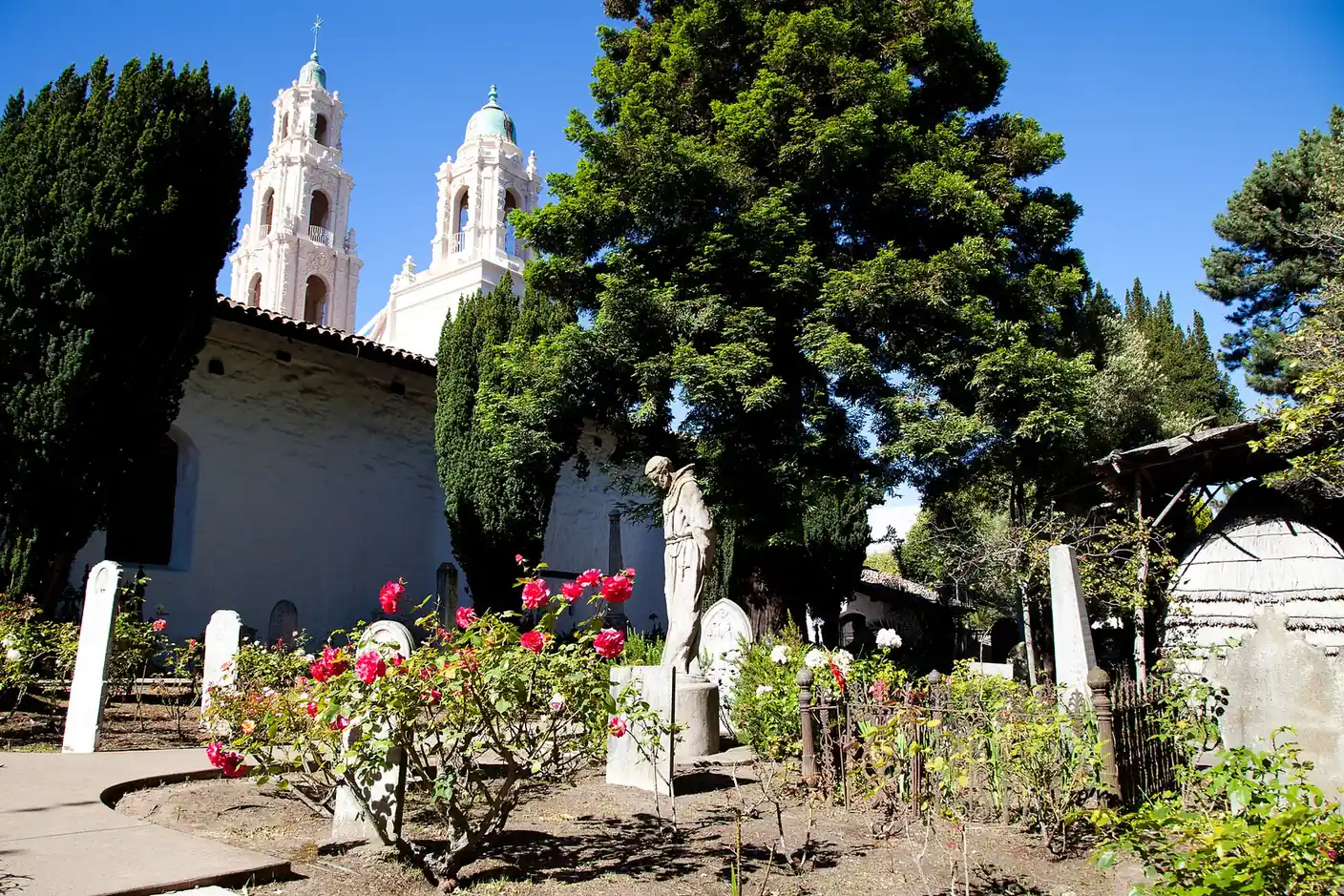
The cemetery beside the chapel is the only cemetery that remains within San Francisco city limits, according to the mission. The city banned new burials and moved most of its cemeteries to Colma, just south of the city, in the early 1900s. Mission Dolores’s cemetery stayed.
It’s a quiet garden, with old headstones, rose bushes and tall trees. Many early California pioneers are buried here, along with many Ohlone, Miwok and other Native Californians, most in unmarked graves. Walk the full perimeter, since some of the most interesting markers are along the edges.
Film fans may recognize the cemetery from Alfred Hitchcock’s 1958 movie Vertigo, which filmed scenes at the mission.
The basilica
The basilica, which Pope Pius XII made a minor basilica in 1952, is the parish’s main church today. Inside, look for the stained glass windows, often described as honoring the California missions, and the high, decorated ceiling. It’s included in your visit.
The gift shop
The gift shop sells books on California mission history, religious items and souvenirs.
How to visit
Hours and admission
As of November 2026, the mission’s website lists the Old Mission, gift shop, museum, cemetery and basilica as open Monday through Friday from 10 am to 4 pm and Saturday and Sunday from 10 am to 5 pm. The Old Mission page lists a suggested donation of $10 per adult and $5 per student. Self-guided visits don’t need a reservation. Docent-led guided tours are unavailable until further notice. Large and school groups should use the mission’s group form.
Hours can change for holidays and special services, so check the website or call (415) 621-8203 before you go.
Getting there
Mission Dolores sits at the corner of 16th and Dolores Streets, on the western edge of the Mission District.
- BART. 16th Street Mission station is about three blocks east. See our BART guide.
- Muni Metro. The J Church line runs along Church Street, a block west.
- Muni bus. The 22 Fillmore stops on 16th Street, near the front door.
Our Muni guide covers fares and the Clipper card.
Parking
Street parking nearby is tight, especially on weekends, when Dolores Park fills up. The mission’s site mentions free parking on weekends. Check the details when you arrive, and see our parking in San Francisco guide for tips.
When to go
Weekday mornings, right at 10 am, are usually the quietest. Midday, when tour groups arrive, can feel crowded in the small chapel. Avoid Sunday mornings if you want to look around, since Masses are held then.
Etiquette
Mission Dolores is an active Catholic parish, not just a museum. Keep your voice down, dress respectfully and don’t take photos during services. Hats off inside the chapel and basilica is customary.
Mass times
As of November 2026, the mission’s website lists Sunday Masses at 8 am and 10 am in English and noon in Spanish, a Saturday vigil Mass at 5 pm in the Old Mission and daily Mass Monday through Saturday at 8 am in the Old Mission. Visitors are welcome to attend.
Visiting with kids
Mission Dolores is a good stop for school-age kids, especially fourth graders. California schools have long taught the missions in fourth grade social studies, and the mission says it welcomes hundreds of school groups every year. Seeing a real adobe building, old tools and the cemetery makes the history more concrete than a textbook.
Younger kids may lose interest quickly in the quiet chapel. Keep the visit short, focus on the painted ceiling and the cemetery garden, then head to the playground at Dolores Park, two blocks away. For more family ideas around the city, see our things to do in San Francisco with kids guide.
Photography tips
Photos are generally fine during visiting hours outside of services, but be considerate of people praying.
- Look up. The painted ceiling is the best shot in the chapel. A wide lens helps.
- Skip the flash. The chapel is dim, and flash flattens the texture of the adobe and the altar.
- Shoot the exterior from across Dolores Street. You can fit the small white chapel and the tall basilica in one frame.
- Visit the cemetery in soft light. Overcast days, common in San Francisco, are ideal for photos among the headstones and roses.
Accessibility
The mission sits at street level on a corner, but the Old Mission is more than two centuries old, and some areas may have steps, uneven floors or narrow doorways. If you use a wheelchair or have mobility concerns, call the parish office at (415) 621-8203 before you go to ask about the best route through the chapel, cemetery and basilica.
Around Mission Dolores
Mission Dolores Park
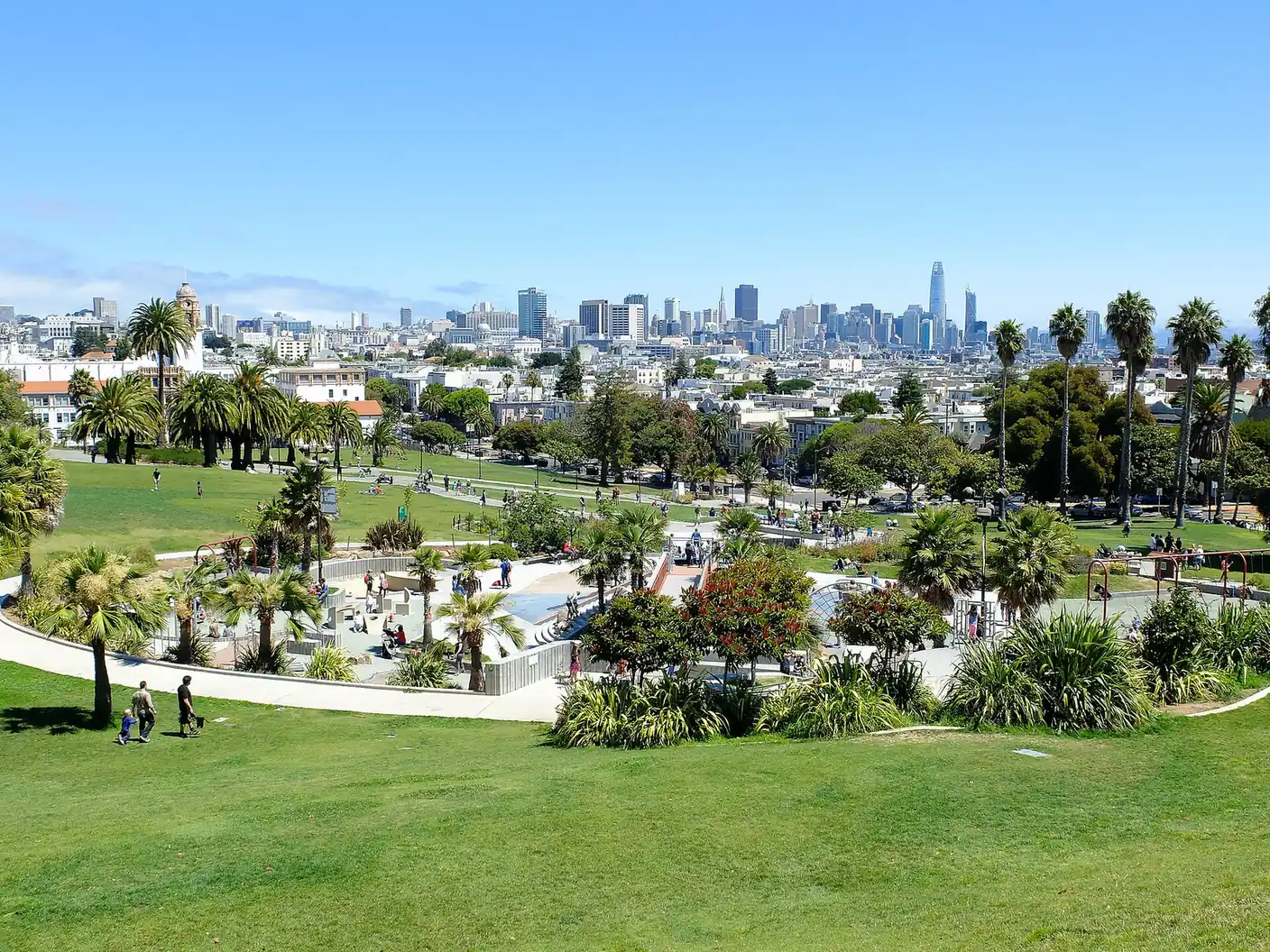
Two blocks south, Mission Dolores Park is one of the city’s most popular parks, with sweeping views of downtown from its upper slopes. On sunny weekends it’s packed with picnics and people watching. It’s a good place to rest after your visit.
Food on Valencia and 16th Street
The Mission District is famous for burritos, taquerias and bakeries. See our best burritos in San Francisco guide. Valencia Street, one block east of Dolores, is lined with cafes, bookstores and restaurants.
Murals
The neighborhood is known for its murals, especially in Balmy Alley and Clarion Alley. Our Mission District guide covers the best ones.
The Castro
The Castro is a short walk west up 16th or 18th Street. See our Castro District guide.
A half-day plan
- 10 am: Arrive at Mission Dolores when it opens. Spend an hour in the chapel, museum, cemetery and basilica.
- 11:15 am: Walk down Dolores Street to Mission Dolores Park for the views.
- Noon: Lunch at a taqueria on 16th or 24th Street.
- 1:30 pm: Walk Clarion Alley or take the bus to Balmy Alley for murals.
Our best museums in San Francisco guide has more history to explore, and our hidden gems in San Francisco list includes other quiet spots.
Visiting other California missions
Mission Dolores is one of 21 missions along the California coast, from San Diego to Sonoma. If you’re traveling south, Mission San Diego de Alcalá was the first, founded in 1769. Our sister site San Diego Updates covers visiting it. Mission San Francisco Solano in Sonoma, the last and northernmost mission, makes an easy stop on our Sonoma day trip.
Frequently asked questions
How much does it cost to visit Mission Dolores?
As of November 2026, the mission lists a suggested donation of $10 for adults and $5 for students. Visits are self-guided and don’t need a reservation.
What are Mission Dolores’s hours?
As of November 2026, it’s open Monday to Friday from 10 am to 4 pm and Saturday and Sunday from 10 am to 5 pm. Check the mission’s website for holiday changes.
Is Mission Dolores the oldest building in San Francisco?
Yes. The Old Mission chapel, completed in 1791, is the oldest intact building in San Francisco. It survived the 1906 earthquake and fire.
Is the Mission Dolores cemetery open to visitors?
Yes. The cemetery garden is part of the self-guided visit. According to the mission, it’s the only cemetery remaining within San Francisco city limits.
How long does a visit to Mission Dolores take?
Most people spend 45 minutes to an hour seeing the chapel, museum, cemetery and basilica. Add time if you want to walk to Mission Dolores Park.
Photo credits
Featured image: Ligocsicnarf89 / Wikimedia Commons, CC BY 4.0; The main altar in the Old Mission chapel: Alvincura / Wikimedia Commons, CC BY-SA 3.0; The cemetery garden beside the chapel: Almonroth / Wikimedia Commons, CC BY-SA 3.0; Mission Dolores Park, two blocks south: Mélanie Lacroix / Wikimedia Commons, CC0.