San Francisco is cool for most of the year. Average highs downtown stay between the upper 50s and about 70°F in every month, and fog and wind from the ocean can make a summer afternoon feel cold. Pack layers. A light shirt, a sweater and a windproof jacket will cover almost any day here.
In this guide
This guide is part of our San Francisco weather by month hub. Temperatures are NOAA’s 1991 to 2020 normals for the San Francisco Downtown station.
Packing at a glance
- Every season Layers, a windproof jacket, comfortable walking shoes
- Summer, June to August Highs 66 to 68°F, fog and wind, bring a warm layer
- Fall, September to October Highs near 70°F, the warmest months
- Winter, December to February Highs 58 to 60°F, the rainy season
- Spring, March to May Highs 62 to 64°F, showers early
- Rarely needed Shorts, unless you head inland
The basics for any season
- A windproof or water-resistant jacket. Wind on the Golden Gate Bridge, at Lands End and along the waterfront is the main thing that makes visitors cold.
- A warm middle layer, such as a fleece or sweater.
- Long pants or jeans. Most locals wear them all year.
- Comfortable walking shoes with good grip. The hills are steep, and some sidewalks are slick when wet.
- A small daypack to carry the layers you take off.
- Sunglasses and sunscreen. The sun can be strong when the fog clears, even on cool days.
- A refillable water bottle. The city’s tap water is safe to drink.
Summer: June to August
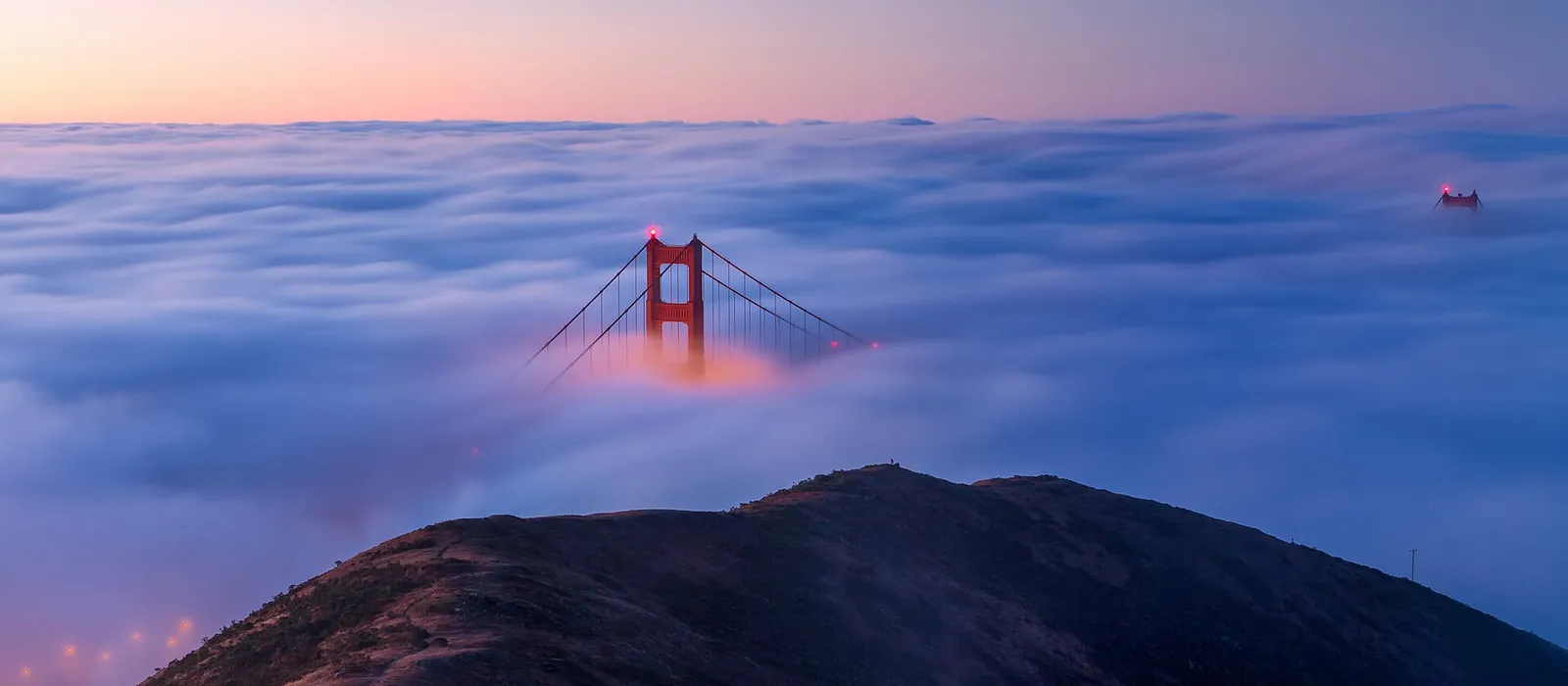
Summer surprises visitors more than any other season. Average highs downtown are in the upper 60s, and the coast and western neighborhoods are often cooler and gray all day. Fog usually rolls in through the Golden Gate in the evening and can linger into the morning.
Pack a real jacket, a warm layer and long pants. A hat and gloves are not silly for an evening on the bridge or at Ocean Beach. If you plan day trips to Napa, Sonoma or the East Bay, add shorts and a T-shirt, since it is often much hotter a few miles inland.
Fall: September and October
These are the warmest months, with average highs near 70°F and less fog. Some afternoons get hot. Pack lighter clothes for the day, plus a sweater and jacket for the evening, when temperatures drop quickly. See the best time to visit for why fall is popular.
Winter: November to February
Winter is the rainy season. December, January and February each average more than 4 inches of rain, usually in storms that pass through over a few days. Average highs are 58 to 60°F, and nights are in the 40s.
Pack a waterproof jacket with a hood, shoes that can handle puddles, and a warm sweater. A compact umbrella helps, though gusty wind can make one hard to use. Our rainy day guide has ideas for wet afternoons.
Spring: March to May
Rain tapers off in March, and April and May are mostly dry, with highs in the low to mid 60s. Afternoons can be windy, especially near the water. Pack the same layers as summer, with a light rain jacket in March.
What to wear out at night
San Francisco is a casual city. Jeans and a nice top work in most restaurants and bars. Bring a jacket for the walk home, since evenings are cool all year. See things to do at night.
Official resources: NOAA climate normals, National Weather Service Bay Area.
Frequently asked questions
Do I need a coat in San Francisco in summer?
Yes. A medium jacket is a good idea, especially for the bridge, the waterfront and the western neighborhoods in the evening.
Can I wear shorts in San Francisco?
On warm days in September and October, yes. Most of the year it is too cool for shorts near the coast.
Do I need an umbrella?
Only from about November to March. A hooded rain jacket is often more practical in the wind.
Photo credits
Featured image: King of Hearts / Wikimedia Commons, CC BY-SA 3.0; The basics for any season: Frank Schulenburg / Wikimedia Commons, CC BY-SA 3.0.