
Día de los Muertos, the Day of the Dead, is one of the most moving nights of the year in San Francisco. Every November 2, thousands of people gather in the Mission District with candles, marigolds and painted faces to walk through the neighborhood and remember people who have died. The tradition comes from Mexico and Central America, and the Mission has celebrated it publicly since the early 1970s.
In this guide
This guide is part of our San Francisco events calendar. For the rest of the month, see events in November.
What Día de los Muertos is
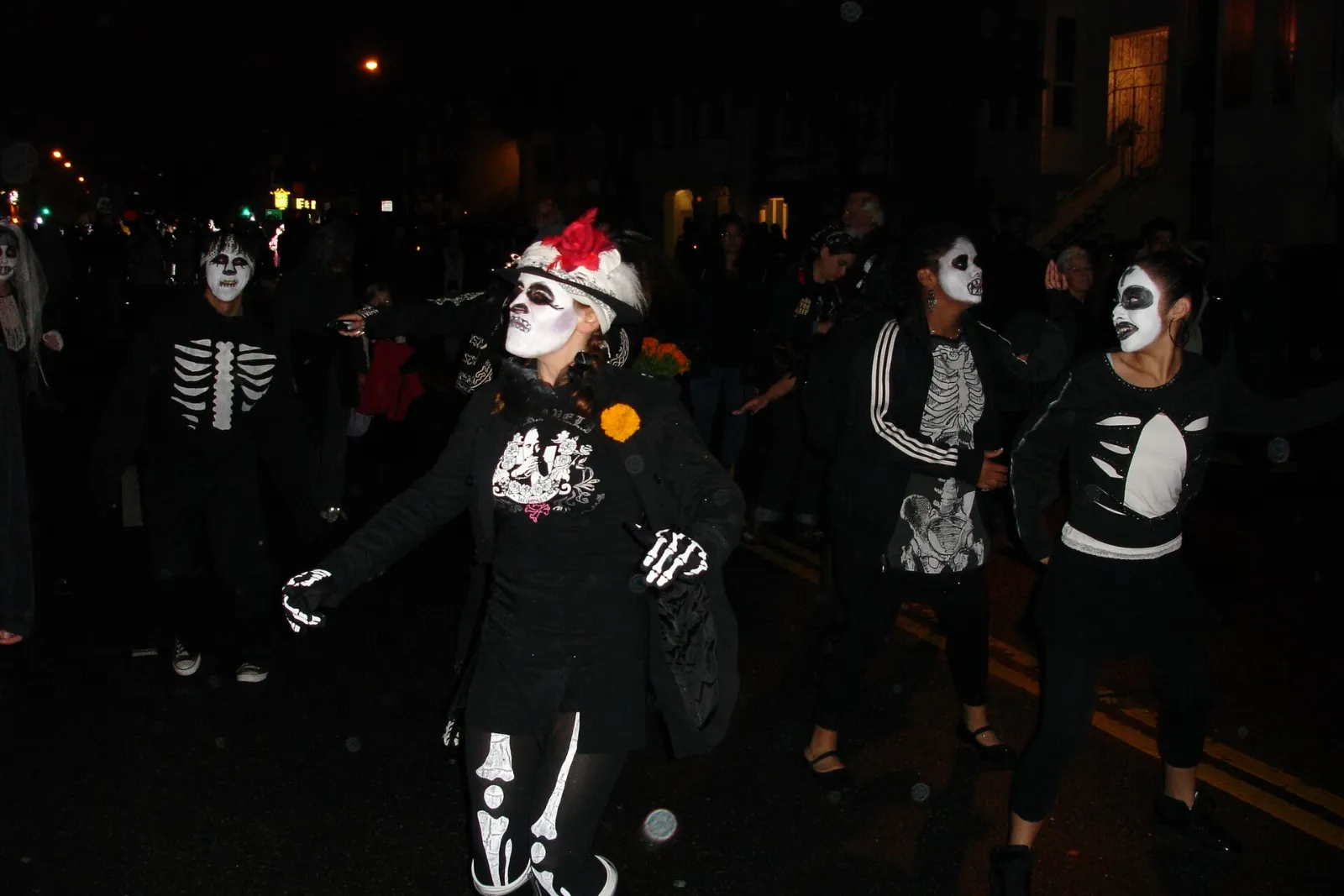
Día de los Muertos is not a sad holiday or a Mexican Halloween. It is a celebration of life and memory, when families welcome back the spirits of loved ones with their favorite food, photos, flowers and candles. November 1 is traditionally for children who have died and November 2 for adults.
The symbols you will see everywhere have meaning. Orange cempasúchil marigolds guide spirits home with their color and scent. Sugar skulls, papel picado banners and the elegant skeleton La Catrina are reminders that death is part of life.
The procession in the Mission
The heart of the night is the community procession on the evening of November 2. In recent years it has assembled around 22nd and Bryant Streets at about 7pm and wound through the Mission’s streets for two hours or so. It is led by drummers and Aztec dancers, and most people carry candles or photos of the people they are honoring.
The walk is free and open to anyone who wants to join quietly. It is crowded, slow and very atmospheric. Check the organizers’ announcements a few days before for the exact route and start time.
Festival of Altars and ofrendas
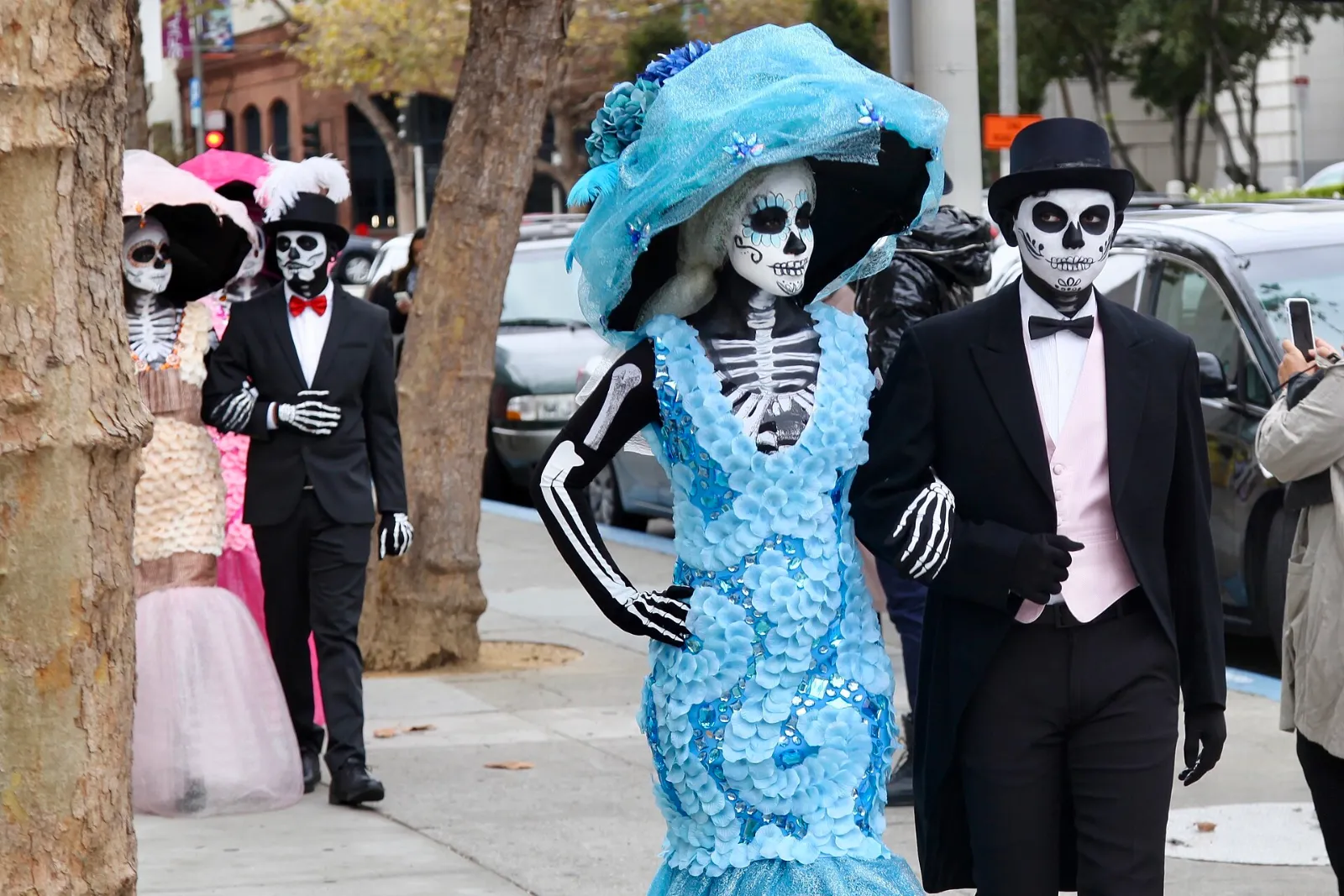
Community altars, called ofrendas, go up around the Mission in the days before November 2. Garfield Square at 25th and Harrison has traditionally hosted a Festival of Altars, where artists and families build altars that visitors can walk among.
Galleries and cultural centers also put on altar exhibitions. Look for shows at the Mission Cultural Center for Latino Arts on Mission Street and Galería de la Raza, and for art along 24th Street, the Calle 24 Latino Cultural District.
How to take part respectfully
- Join the procession quietly and walk with the crowd, not against it.
- Bring a candle, flowers or a photo of someone you want to remember.
- Ask before photographing people, and never touch or move items on an altar.
- Face painting is common, but treat it as part of a memorial, not a costume party.
- Keep alcohol out of the procession and leave dogs at home.
Food and where to go before or after
Pan de muerto, a soft sweet bread decorated with bone shapes, appears in Mission bakeries in late October. Panaderías along 24th Street are the classic place to buy it, along with hot chocolate and tamales.
The Mission is also one of the best areas for dinner afterward. See our guide to the best burritos in San Francisco or explore the neighborhood in our Mission District guide.
Getting there
Take BART to 24th St Mission and walk east along 24th Street. Driving and parking in the Mission on November 2 is difficult, and some streets close for the procession. Dress in layers, because evenings in early November are often cool and damp.
Official resources: Calle 24 Latino Cultural District, Mission Cultural Center for Latino Arts.
Frequently asked questions
When is Día de los Muertos in San Francisco?
The main procession is held on the evening of November 2 in the Mission District. Altars and exhibitions go up in the days before.
Is the Día de los Muertos procession free?
Yes. The procession and most community altars are free and open to everyone.
Where does the procession start?
In recent years it has gathered around 22nd and Bryant Streets in the Mission. Confirm the route with the organizers before you go.
Can tourists join the procession?
Yes, as long as you join respectfully. Many people carry a candle or a photo of a loved one.
Photo credits
Featured image: Al83tito / Wikimedia Commons, CC0; Festival of Altars and ofrendas: Nikita / Wikimedia Commons, CC BY 2.0.