
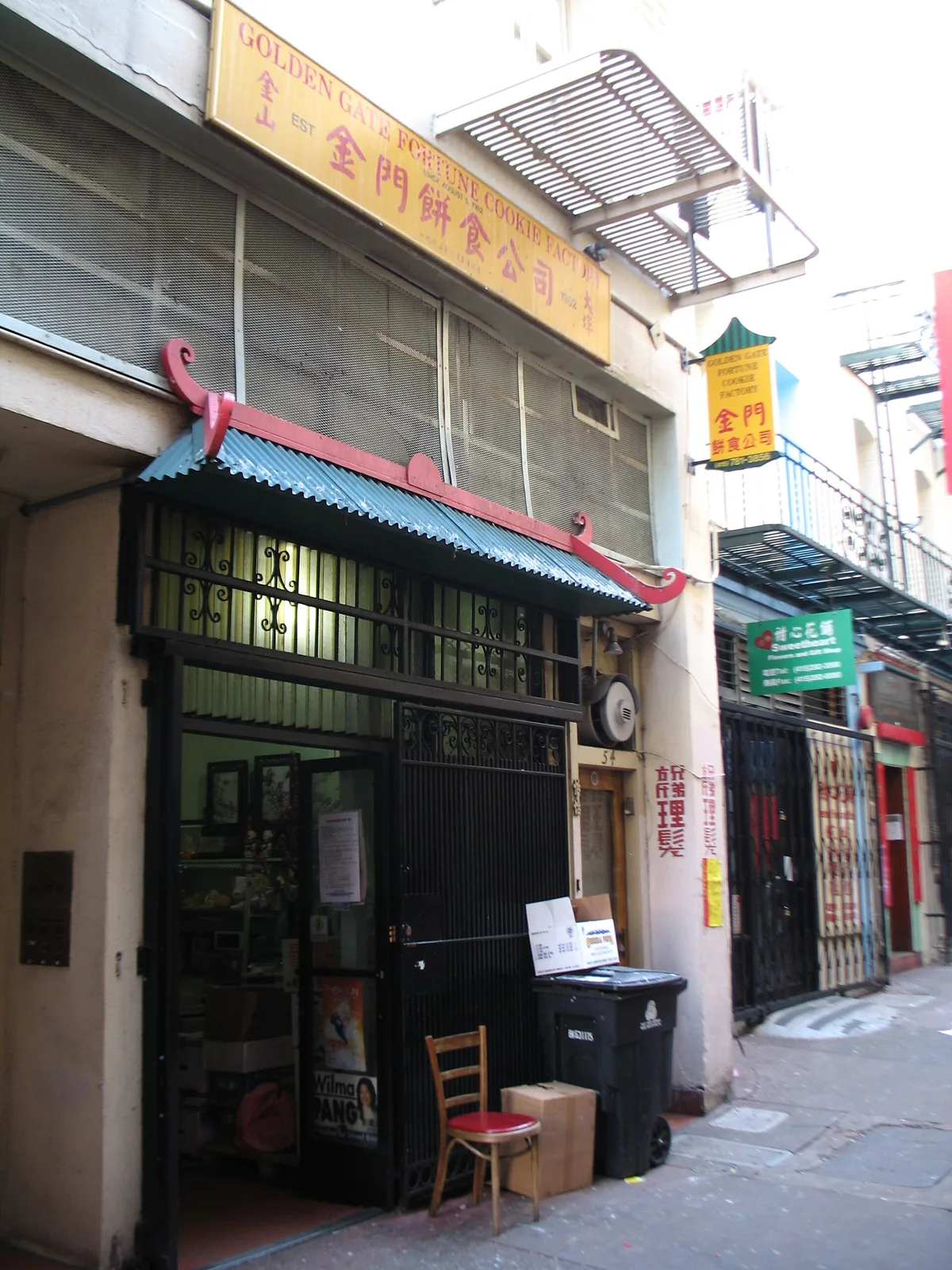
The Golden Gate Fortune Cookie Factory is a tiny, family-run bakery at 56 Ross Alley in San Francisco’s Chinatown, where workers fold fortune cookies by hand off hot griddles. It’s open daily from 9 am to 6 pm as of November 2026, entry is free and you’ll usually be handed a warm sample. Bring cash for a bag of cookies, and if you want photos, ask first, since the shop has asked for a small fee.
In this guide
This guide is part of our San Francisco attractions hub. Hours and prices are as of November 2026, so check before you go.
At a glance
| Details (as of November 2026) | |
|---|---|
| Address | 56 Ross Alley, Chinatown, between Washington and Jackson streets |
| Hours | Daily, 9 am to 6 pm |
| Phone | (415) 781-3956 |
| Admission | Free |
| Founded | 1962 |
| What you can buy | Bags of fortune cookies, flavored cookies, custom fortunes |
| Photos | Ask first; the shop has asked visitors for a small fee |
| Time needed | 10 to 20 minutes |
| Payment | Bring cash to be safe |
What it’s like inside
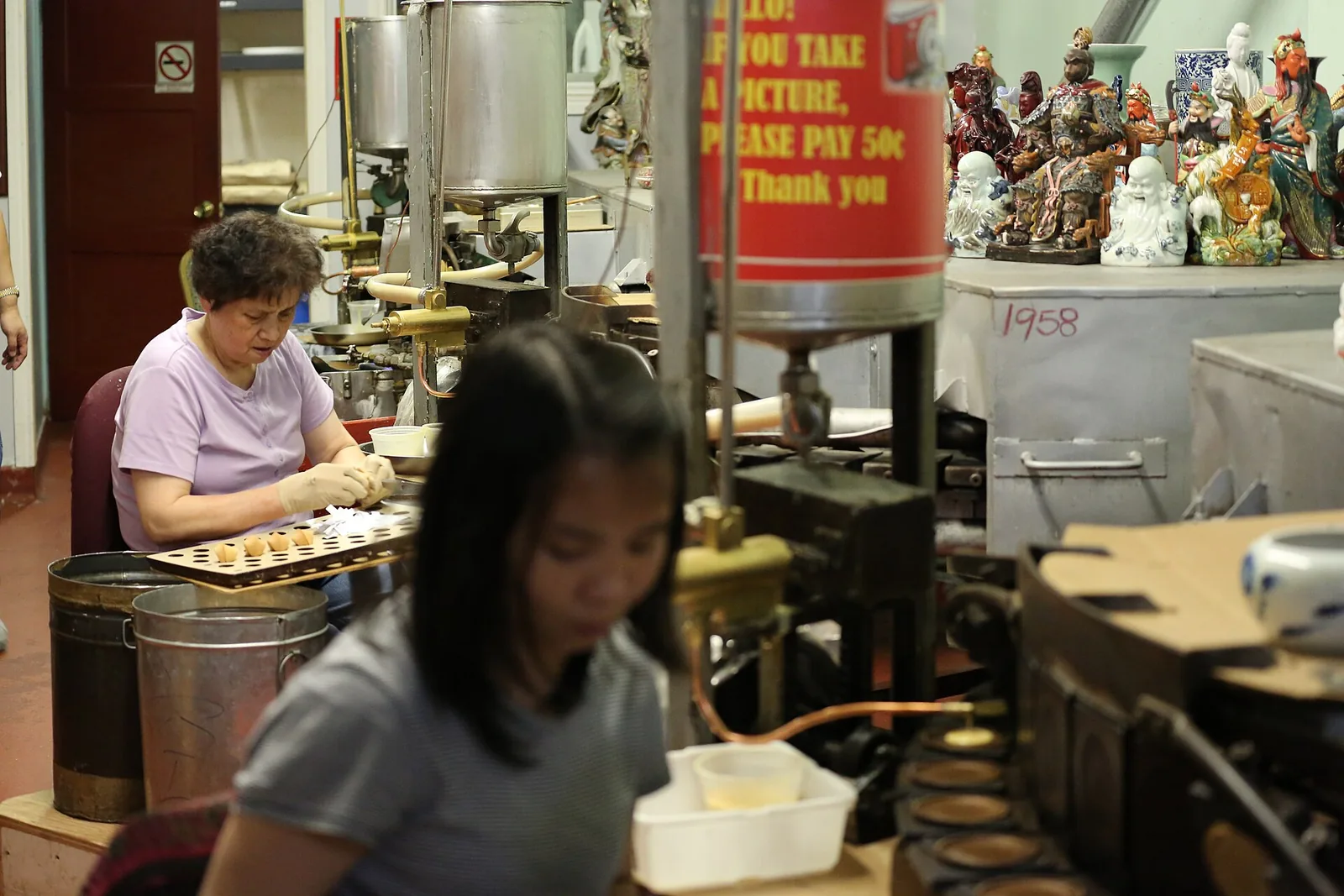
Walk into the narrow shop and you’ll smell vanilla and toasted sugar right away. A couple of workers sit at a machine with a rotating wheel of small griddles. Batter goes onto each plate, the wheel turns and bakes it into a thin, soft disc, and a worker lifts each warm round off, places a paper fortune in the middle and folds it into shape by hand, all in a few seconds before it cools and hardens.
The shop has been making cookies this way since 1962, and it’s been reported to turn out as many as 10,000 cookies a day. It’s very small, with room for only a handful of visitors at once, so you may have to wait at the door at busy times. Be patient and let people inside finish before you squeeze in.
You’ll usually be offered a free sample, a flat, warm cookie before it’s folded or a freshly folded one. Taste it. A warm fortune cookie is softer and more flavorful than the packaged kind.
How the cookies are made
A fortune cookie starts as a thin batter of flour, sugar, eggs, oil and flavoring like vanilla. At the factory, small portions are poured onto round griddle plates that move slowly around the machine. By the time a plate comes back around, the batter has baked into a soft, pale disc.
That’s when the hand work starts. A worker peels the hot disc off with bare fingers or a quick tool, drops a paper fortune in the center, folds the disc in half and then bends it over the edge of a metal rod or cup to make the classic crescent shape. The cookie has to be folded in a few seconds, before it cools and turns crisp. Folded cookies go into trays to cool and harden, and then they’re bagged.
Watching it for a minute or two is the best part of the visit. The workers are fast, and they do this for hours. It’s a good reminder of how much skill goes into something most of us crack open without a thought.
What to buy
The shop sells bags of fortune cookies in plain vanilla and other flavors, including chocolate, strawberry and green tea, plus glazed or dipped versions. Some visitors also like the flat cookies without fortunes. Bags make an easy, cheap souvenir. Prices are low, and it’s best to bring cash.
Custom fortunes
One of the shop’s most popular services is custom fortunes. You can write your own message, and the workers will fold it into cookies for you. People use them for marriage proposals, birthday surprises, party favors and inside jokes. Ask at the counter about how many you need, the cost and how long it takes. For a large order, call ahead.
Adult fortunes
The shop has long sold a cheeky line of “adult” fortune cookies, which are a popular gag gift. They’re not for kids.
Photo etiquette
This is a working bakery, and the people folding cookies are doing a job. The shop has asked visitors who want to take photos or videos to pay a small fee, which third-party reports put at about 50 cents. Ask before you raise your phone, pay if asked and don’t block the door or the workers while you shoot. Buying a bag of cookies is the best way to say thanks.
Getting to Ross Alley
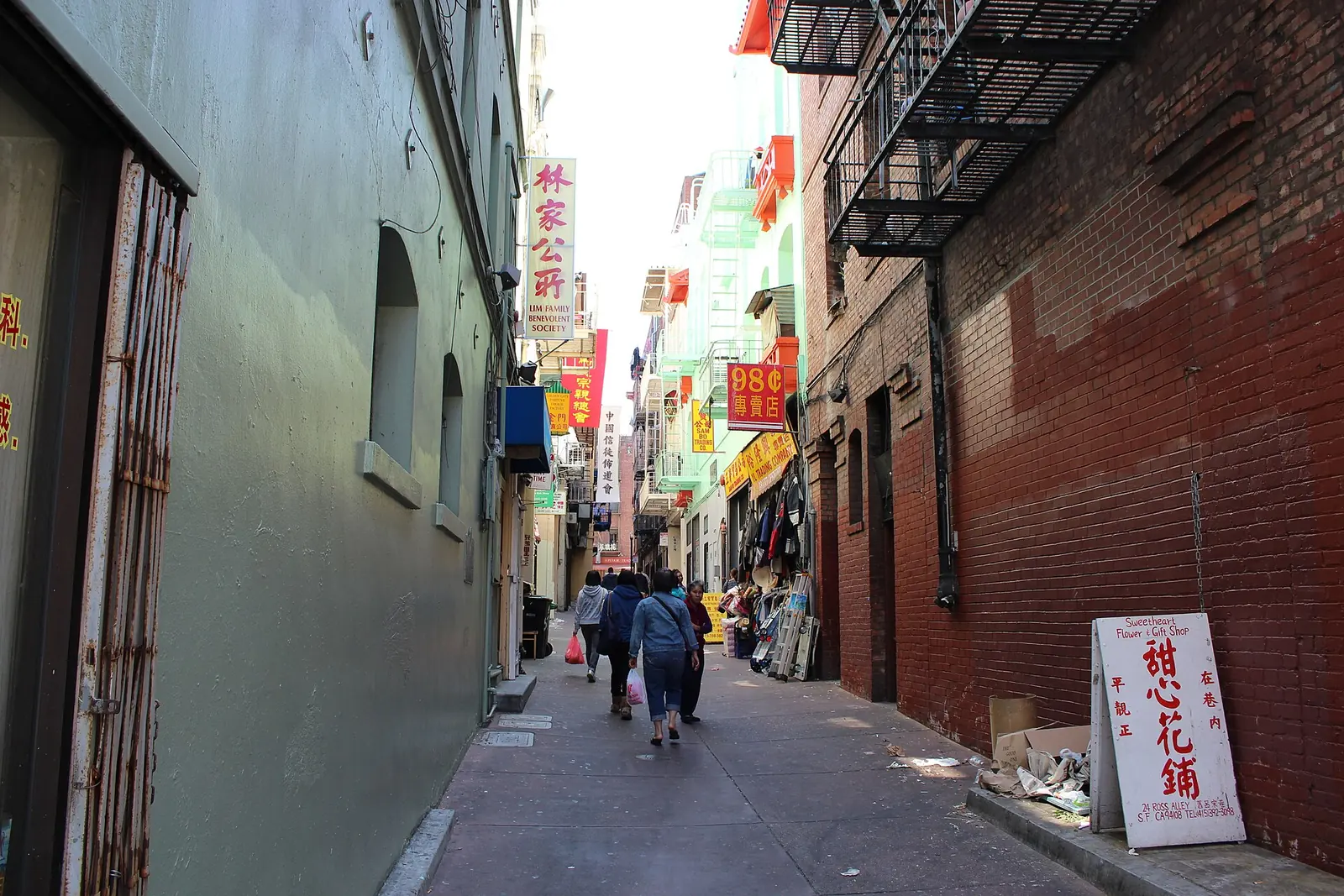
Ross Alley is a narrow lane in the heart of Chinatown, running between Washington Street and Jackson Street, parallel to Grant Avenue and Stockton Street. It’s one of the oldest alleys in the city, and it’s lined with murals and small businesses. The factory is about halfway down.
From Union Square, walk north on Grant Avenue through the Dragon Gate at Bush Street, then follow Grant into Chinatown and turn left on Washington or Jackson. It’s about a 15-minute walk. The Powell-Hyde and Powell-Mason cable cars stop at Washington and Powell, a few blocks away, and the Muni Central Subway’s Chinatown-Rose Pak station is on Stockton Street, also a few blocks away. See our Chinatown guide for what else to see.
Ross Alley is narrow and sometimes has delivery traffic, so walk single file when needed, and keep an eye out for vehicles backing up.
A little Ross Alley history
Ross Alley is one of the oldest streets in San Francisco, dating to the city’s early Gold Rush years. In the 19th century, Chinatown’s narrow alleys were packed with boarding houses, small workshops and gambling halls, and the neighborhood was rebuilt after the 1906 earthquake and fire destroyed it. Today Ross Alley is quieter, with murals and small businesses alongside the factory. Its narrow walls and old brick make it one of the most photographed lanes in Chinatown.
The surprising history of the fortune cookie
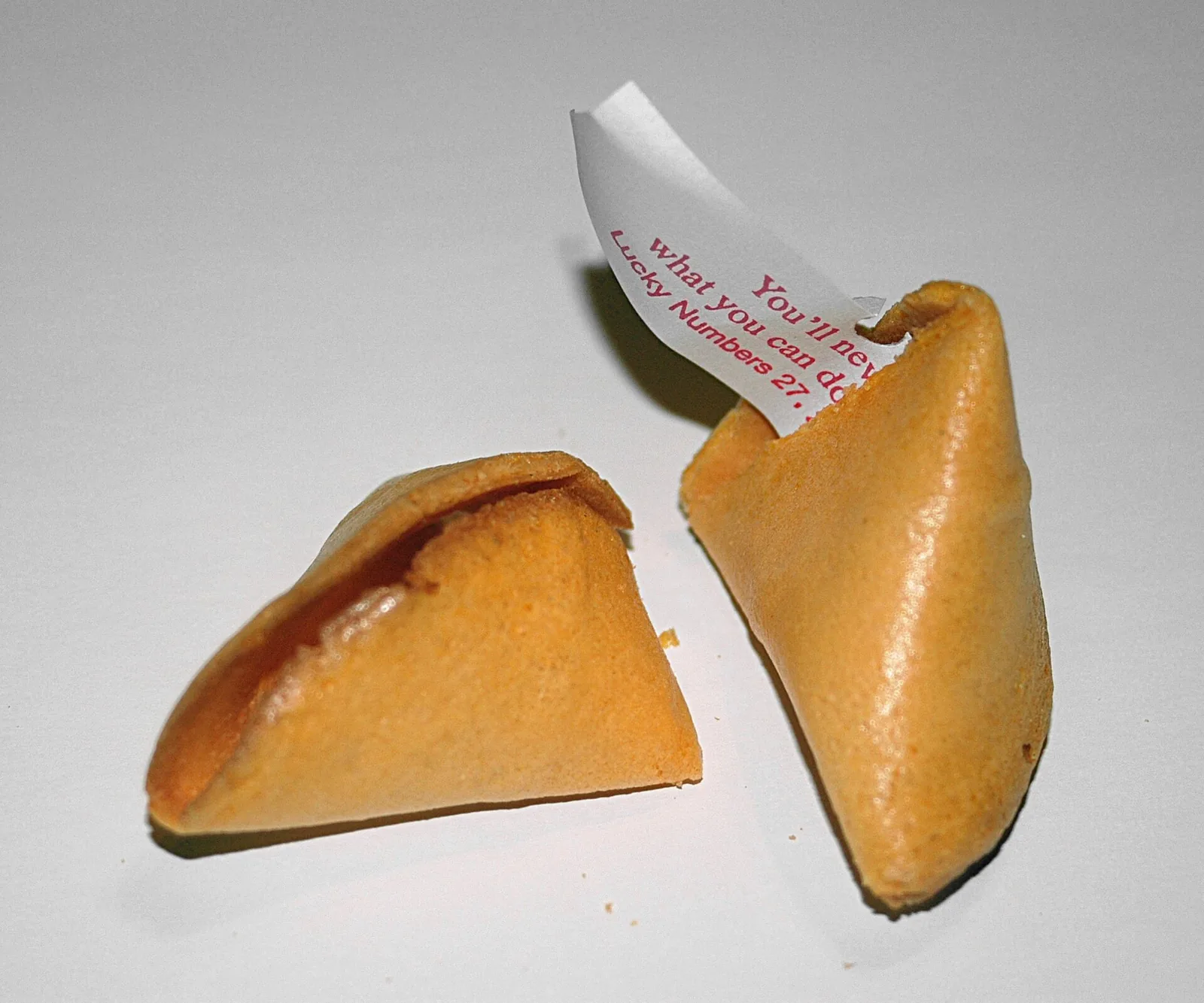
Despite its place in Chinese American restaurants, the fortune cookie isn’t a traditional Chinese food. Historians trace it to Japan and to Japanese immigrants in California. In Japan, a similar cracker called tsujiura senbei, with a fortune tucked into the fold, was made at least as far back as the 19th century.
San Francisco claims a big part of the story. Makoto Hagiwara, the Japanese gardener who managed the Japanese Tea Garden in Golden Gate Park, is often credited with serving fortune cookies there in the early 1900s, around 1914, according to accounts collected by the Smithsonian and San Francisco Heritage. Benkyodo, a Japanese confectionery founded in San Francisco in 1906, made cookies for the tea garden. Los Angeles has its own competing claims.
Many Japanese American bakeries made fortune cookies before World War II. When Japanese Americans were forced into incarceration camps during the war, Chinese American bakers took over much of the business, and the cookies became linked with Chinese restaurants across the country. Today, most fortune cookies are made by machine in large factories, which is part of what makes a hand-folded cookie in Ross Alley special.
If you’re curious, visit the Japanese Tea Garden in Golden Gate Park, where you can still order tea and snacks, and walk through Japantown, where the city’s Japanese American history is rooted.
How to plan your visit
Best time to go
Mornings and weekdays are the quietest. Weekend afternoons can be busy, with a line outside the door. Since the visit is short, it’s easy to fit in on a Chinatown walk. If you’re hoping to watch the workers for a while or ask about a custom order, a weekday morning gives you the most room and the most relaxed staff.
Combine it with a Chinatown walk
Start at the Dragon Gate on Grant Avenue, browse the shops along Grant, walk through Portsmouth Square, visit the Tin How Temple on Waverly Place, then stop at the factory in Ross Alley. Finish with dim sum or a Chinatown bakery. Our best dim sum in San Francisco guide has places nearby.
Taking cookies home
Fresh fortune cookies are best within a few days. Keep the bag sealed so they don’t soak up moisture and go soft, especially in San Francisco’s damp air. If you’re flying home, pack them in a hard container or the middle of your carry-on so they don’t get crushed. Custom fortune cookies make good gifts, but plan the order early in your trip.
More sweet stops nearby
Chinatown has plenty more to snack on within a few blocks. Golden Gate Bakery on Grant Avenue is famous for its egg tarts, and just as famous for keeping unpredictable hours, so treat it as a bonus if it’s open. Grant and Stockton streets have many Chinese bakeries selling buns, mooncakes around the Mid-Autumn Festival and other pastries, and tea shops along Grant offer tastings. A box of pastries and a bag of fortune cookies make a very San Francisco picnic in Portsmouth Square or up the hill at Coit Tower.
Visiting with kids
Kids love watching the cookies being made, and the free sample doesn’t hurt. Keep little ones close in the small space, and stay out of the workers’ way.
Lunar New Year
Chinatown is at its busiest and most festive around Lunar New Year, when the parade and street fair draw huge crowds. Expect lines at the factory. See our Lunar New Year parade guide for dates.
Is it worth visiting?
Yes, if you’re in Chinatown. It’s free, it takes 15 minutes and you get a warm cookie and a look at a craft that’s mostly disappeared. It’s not a big attraction, and you won’t spend long inside, but that’s part of its charm. Pair it with a walk and a meal for a great half day. For more low-cost ideas, see our free things to do in San Francisco list.
Traveling on to Southern California? Our sister site Los Angeles Updates covers LA, which has its own claim on fortune cookie history.
Frequently asked questions
Is the Golden Gate Fortune Cookie Factory free?
Yes. Admission is free, and you’ll usually get a free sample. The shop has asked for a small fee if you want to take photos.
What are the Golden Gate Fortune Cookie Factory’s hours?
As of November 2026, it’s open daily from 9 am to 6 pm. Call (415) 781-3956 to confirm before you go.
Where is the fortune cookie factory in San Francisco?
It’s at 56 Ross Alley in Chinatown, a narrow alley between Washington and Jackson streets, a block west of Grant Avenue.
Can you make custom fortune cookies there?
Yes. You can write your own fortunes and have them folded into cookies. Ask at the counter about pricing and timing, and call ahead for big orders.
Were fortune cookies invented in San Francisco?
San Francisco has a strong claim. Makoto Hagiwara is often credited with serving them at the Japanese Tea Garden in Golden Gate Park around 1914, though the cookie’s roots go back to Japan, and Los Angeles has competing claims.
Photo credits
Featured image: Tobias Kleinlercher / Wikimedia Commons, CC BY-SA 3.0; The factory's storefront on Ross Alley: gregpoo / Wikimedia Commons, CC BY-SA 2.0; Ross Alley in Chinatown: Gary Stevens / Wikimedia Commons, CC BY 2.0; A fortune cookie, split open: Lorax (English Wikipedia) / Wikimedia Commons, CC BY-SA 3.0.