
The Castro is one of the most famous LGBTQ+ neighborhoods in the world. From the 1970s it became a center of gay life and political activism, and it was here that Harvey Milk ran his camera shop and his campaigns to become one of the first openly gay elected officials in the country. A giant rainbow flag still flies over Castro and Market Streets, and the neighborhood is a joy to explore by day and night.
In this guide
This guide is part of our San Francisco neighborhood guide. For June celebrations, see our Pride guide.
The Castro Theatre
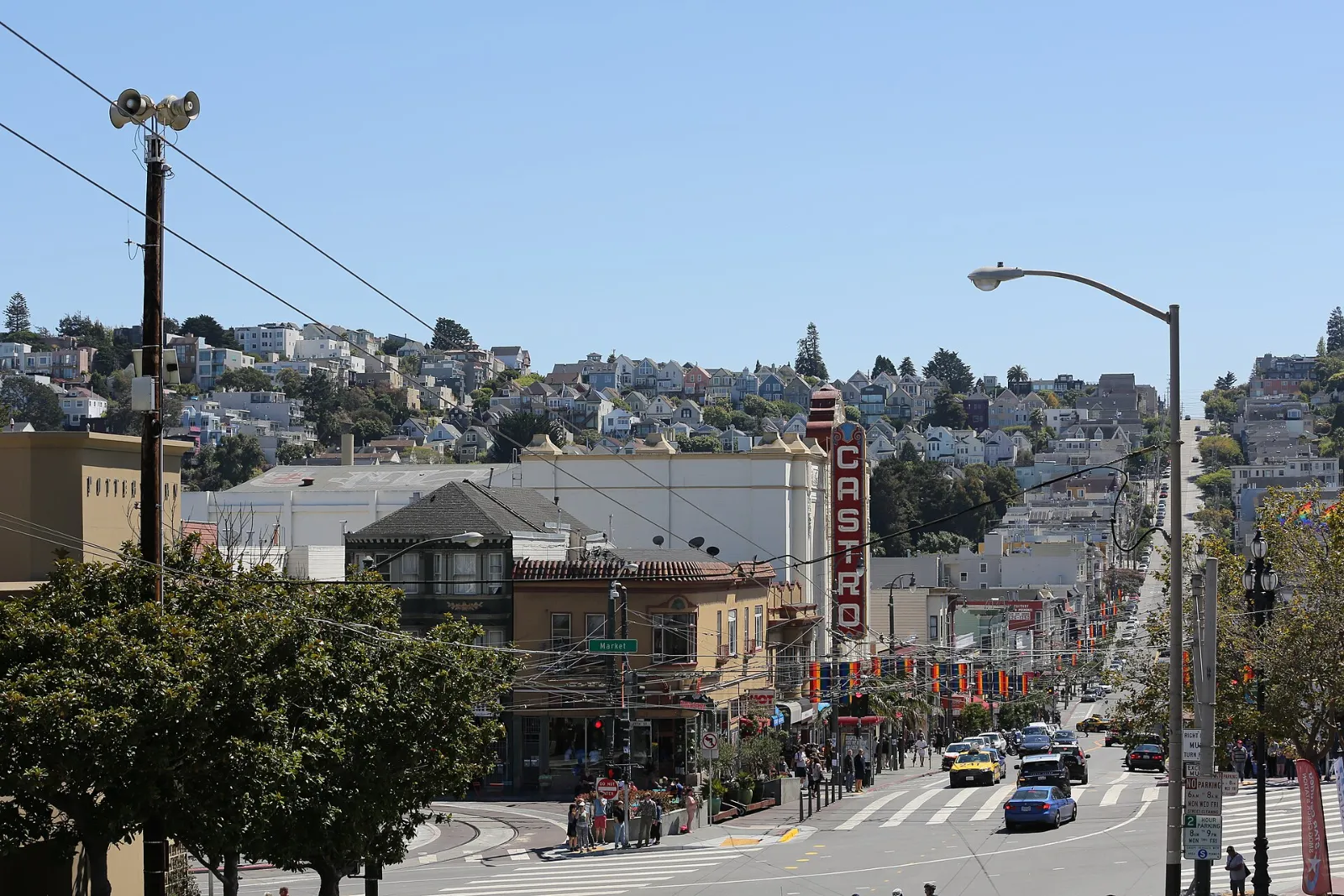
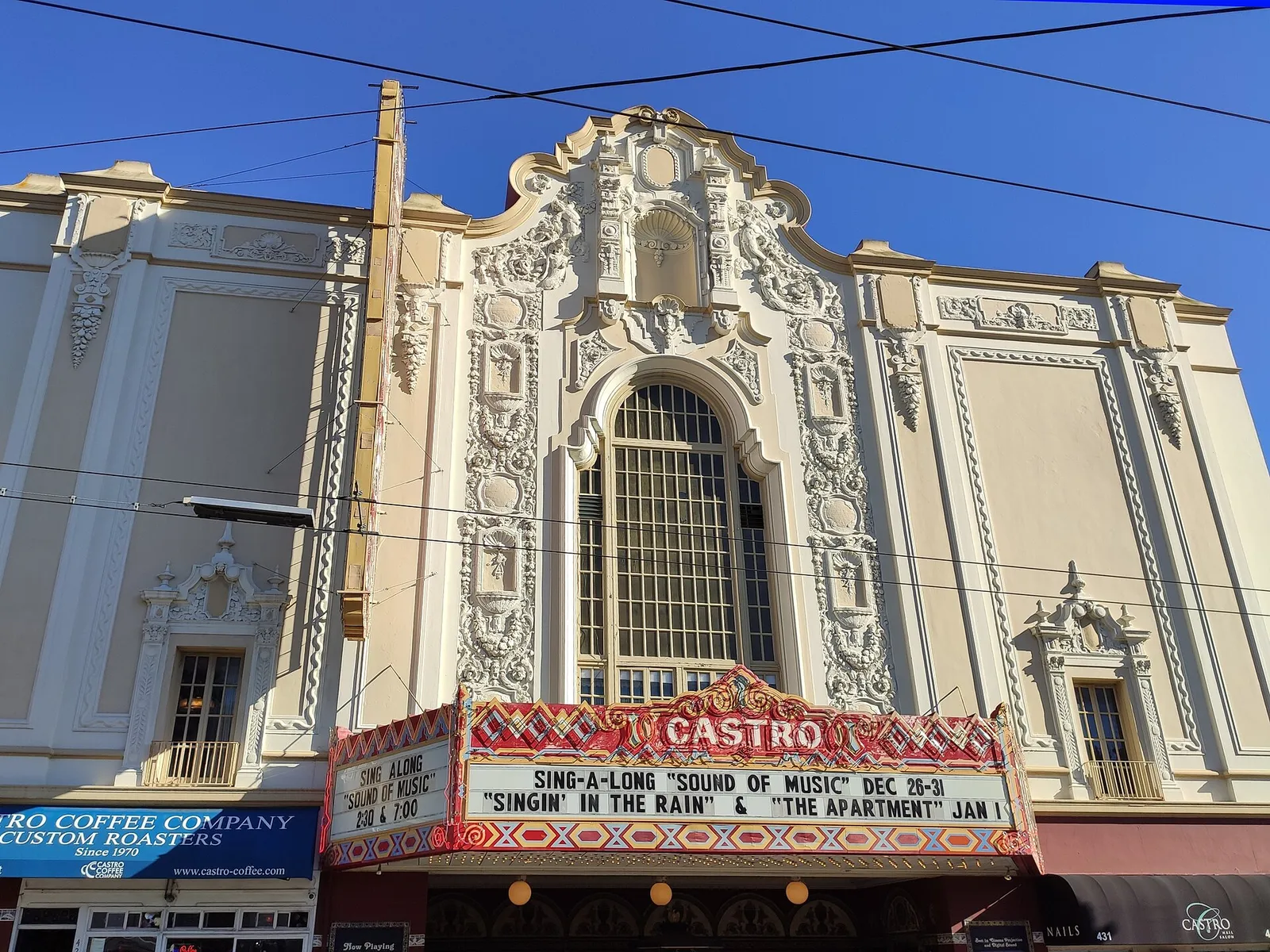
The Castro Theatre, with its glowing neon marquee, opened in 1922 and is one of the last great movie palaces in the country. After a major renovation, it now hosts concerts, film festivals, sing-alongs and special screenings. Check the calendar and catch a show if you can.
History and landmarks
- Harvey Milk Plaza: at the Castro Muni station, under the giant rainbow flag.
- 575 Castro Street: the site of Milk’s Castro Camera shop and campaign office, marked with a plaque and a mural.
- Rainbow Honor Walk: bronze plaques in the sidewalk honoring LGBTQ+ figures from around the world.
- GLBT Historical Society Museum on 18th Street: a small museum on the community’s history in San Francisco and beyond.
- Pink Triangle Park: a memorial to LGBTQ+ people persecuted in the Holocaust, near Castro and Market.
- Rainbow crosswalks: at the intersection of Castro and 18th Streets.
Bars and nightlife
The Castro has some of the city’s best-known gay bars, from long-running neighborhood spots to dance clubs. Twin Peaks Tavern at Castro and Market is famous for being among the first gay bars in the country with large clear windows facing the street. Evenings are busiest Thursday to Saturday. See our guide to gay bars in San Francisco.
Food and shopping
Castro and 18th Streets are lined with brunch spots, bakeries, casual restaurants and independent shops. The neighborhood is also close to Noe Valley to the south and Dolores Park to the east, so it fits easily into a day in the Mission.
Events
Pride weekend in late June brings huge crowds and parties to the Castro. The Castro Street Fair in early October is a free neighborhood celebration with music and stalls, and Halloween in the Castro has become a big local tradition again in recent years.
Getting there
The K, L and M Muni Metro lines stop at Castro station, and the F line vintage streetcar ends at Castro and Market, making the ride from downtown easy and scenic. The 24 and 33 buses also serve the area.
Official resources: GLBT Historical Society, Castro Theatre, Rainbow Honor Walk.
Frequently asked questions
What is the Castro famous for?
It is one of the world’s best-known LGBTQ+ neighborhoods, and the home of Harvey Milk’s activism in the 1970s.
Is the Castro worth visiting?
Yes, for its history, the Castro Theatre, the Rainbow Honor Walk and its bars and cafes.
How do you get to the Castro from downtown?
Take the K, L or M Muni Metro to Castro station, or ride the F line streetcar to its end at Castro and Market.
Is the Castro safe?
The main streets are busy and welcoming day and night. Keep the usual city awareness late at night.
Photo credits
Featured image: Tobias Kleinlercher / Wikipedia / Wikimedia Commons, CC BY-SA 3.0; History and landmarks: Américo Toledano / Wikimedia Commons, CC BY-SA 4.0.