
Caltrain is the commuter rail line that runs from San Francisco’s 4th and King station down the Peninsula to Palo Alto, Mountain View and San Jose, with weekday peak trains continuing to Gilroy. As of November 2026, adult fares start at $4 for one zone and run $8.50 to Palo Alto and $10.75 to San Jose, and you can pay with Clipper or a tap-to-pay bank card. Electric trains now run the main line, and the fastest weekday trains reach San Jose in about an hour.
In this guide
This guide is part of our getting around San Francisco hub. Fares and schedules are as of November 2026, so check caltrain.com before you ride.
At a glance
| Details (as of November 2026) | |
|---|---|
| San Francisco stations | 4th and King (main terminal), 22nd Street, Bayshore |
| Southern end | San Jose Diridon and Tamien; weekday peak trains to Gilroy |
| Adult one-way fare | $4.00 (1 zone) to $15.25 (6 zones) |
| SF to Palo Alto | 3 zones, $8.50 one way |
| SF to San Jose Diridon | 4 zones, $10.75 one way |
| Youth fare | $1 one way, any distance |
| Ways to pay | Clipper card, Clipper in a phone wallet, contactless bank card, ticket machine |
| Fastest SF to San Jose | About 60 minutes on limited-stop weekday trains |
| Fare change | Multi-zone fares go up January 1, 2027 |
How Caltrain works
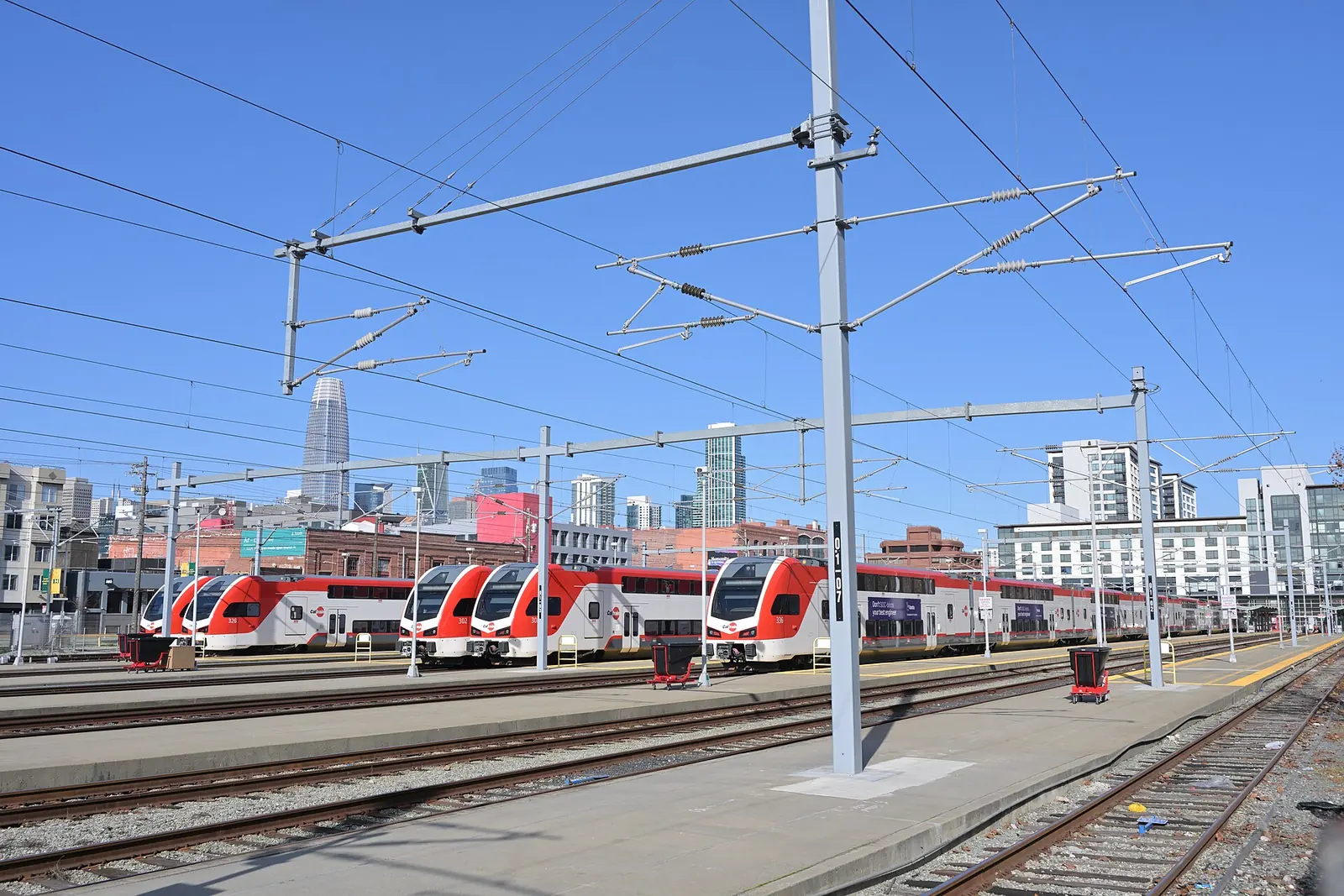
Caltrain runs about 50 miles between San Francisco and San Jose along the Peninsula, with a weekday peak extension south to Gilroy. It’s the easiest way to get from the city to Stanford, downtown Palo Alto, Mountain View, Sunnyvale or downtown San Jose without driving US 101.
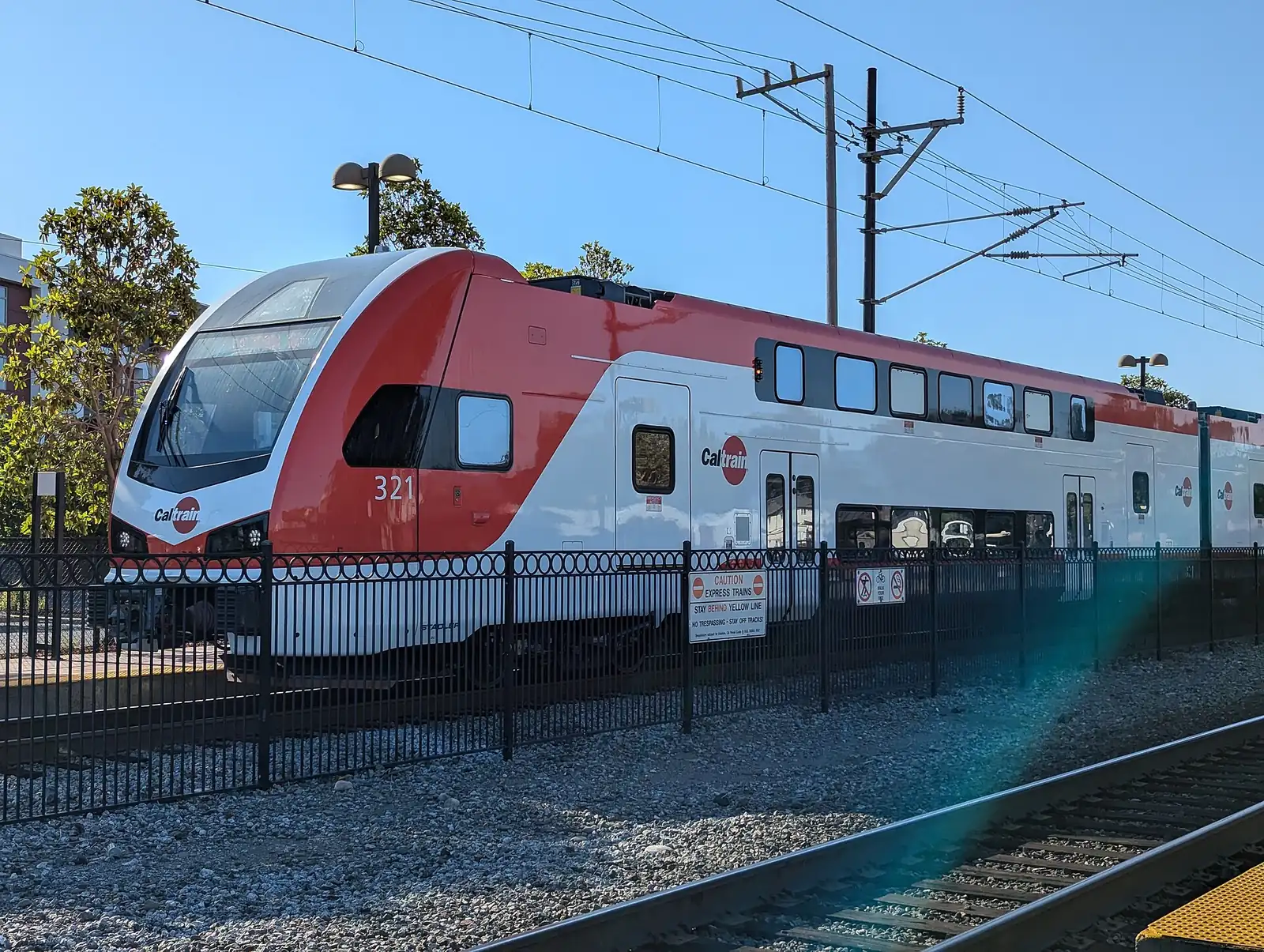
The big change of recent years is electrification. In September 2024, Caltrain began running new electric trains between San Francisco and San Jose, replacing most of its old diesel fleet. The electric trains accelerate faster, which made the schedule quicker and more frequent, and they’re quieter and smoother inside. Service south of San Jose to Gilroy still uses diesel trains, and on the current weekday timetable, those trains start or end at San Jose Diridon.
Train types
Caltrain runs a mix of trains that stop at every station and limited or express trains that skip some stops. The train number tells you which is which on the timetable, and station platforms and the Caltrain app show the train type. If you’re going between big stations like San Francisco, Millbrae, Palo Alto, Mountain View and San Jose, look for the faster trains, which save 15 minutes or more.
Stations in San Francisco
4th and King
The main San Francisco station is at 4th and King streets in SoMa, near Oracle Park. Almost everyone boarding in the city starts here. The Muni N Judah and T Third streetcar lines serve the area, and it’s about a 15-minute walk from Union Square. Our Muni guide covers connections.
22nd Street
The 22nd Street station is in Dogpatch, at the edge of Potrero Hill. It’s a good choice if you’re staying in the Mission, Potrero Hill or Dogpatch, and most trains stop here.
Bayshore
Bayshore station sits just south of the city line in Brisbane, near Visitacion Valley. It’s mostly used by locals in the southeast neighborhoods.
Caltrain fares
Caltrain fares depend on how many zones you travel through. The line is divided into six zones. San Francisco is in Zone 1, Millbrae is in Zone 2, Palo Alto is in Zone 3, San Jose Diridon is in Zone 4, and Gilroy is in Zone 6. A trip from San Francisco to Palo Alto covers three zones.
Here are the current adult fares, according to Caltrain’s fares page:
| Zones | Adult one-way | Adult day pass | Eligible discount one-way |
|---|---|---|---|
| 1 zone | $4.00 | $8.00 | $2.00 |
| 2 zones | $6.25 | $12.50 | $3.00 |
| 3 zones | $8.50 | $17.00 | $4.00 |
| 4 zones | $10.75 | $21.50 | $5.00 |
| 5 zones | $13.00 | $26.00 | $6.00 |
| 6 zones | $15.25 | $30.50 | $7.00 |
Youth fares are $1 one way for any distance, and a youth day pass is $2. Eligible discount fares apply to seniors, people with disabilities and Medicare cardholders with the right Clipper card or ID. A one-way ticket is valid for four hours after purchase in one direction.
Fare changes on January 1, 2027
Caltrain’s board approved a new fare structure in November 2025, and the next step takes effect January 1, 2027. The 1-zone fare stays at $4, but each additional zone goes up 25 cents. A trip from San Francisco to Palo Alto will rise from $8.50 to $9.00, and San Francisco to San Jose will go from $10.75 to $11.50. Day passes and monthly passes go up too. Youth fares and parking fees stay the same, and monthly pass holders will need to tap on and tap off for every ride starting January 1.
Monthly passes
Monthly passes are loaded on Clipper and cover unlimited trips within the zones on the pass. On weekends and holidays, a monthly pass works across all zones. As of November 2026, an adult monthly pass is $96 for one zone and $204 for three zones. Customers with a pass of two zones or more also get free local rides or credits on SamTrans buses.
How to pay
You’ve got four options:
- Clipper card. Tap on at a Clipper reader on the platform before you board, and tap off when you get off. Caltrain charges the maximum fare if you forget to tap off. Our Clipper card guide explains how to get one and load it.
- Clipper in your phone. Add a Clipper card to Apple Wallet or Google Wallet and tap your phone the same way.
- Contactless bank card. Tap a contactless debit or credit card, or a card in your phone wallet, at the Clipper validators on the platform. Take the card out of your wallet before tapping so the reader charges the right one, and tap on and off for every trip.
- Ticket machine. Buy a one-way ticket or day pass at any station ticket machine. Paper tickets don’t need to be tapped.
Conductors check fares on board, so make sure you’ve tapped on before the train leaves. Tapping on and off happens on the platform, not on the train.
Schedules and travel times
On weekdays, Caltrain runs trains from early morning until after midnight. On the November 2026 weekday timetable, the first train leaves San Francisco just before 5 am and the last departs a little after midnight, with trains at least every 30 minutes for most of the day and extra limited-stop trains at rush hour. Weekend service runs on a separate timetable, so check before you travel.
Typical weekday times from San Francisco, based on that timetable:
- Millbrae (for the SFO BART connection): about 20 minutes.
- Palo Alto: about 40 minutes on limited-stop trains and about 50 minutes on trains that stop everywhere.
- Mountain View: roughly 45 minutes to an hour.
- San Jose Diridon: about 60 minutes on the fastest trains and around 75 to 80 minutes on all-stop trains.
Caltrain’s live map and the station pages show real-time arrivals. As of November 2026, Caltrain notes construction at San Jose Diridon from October 19 through December, so follow platform signs and watch for track changes there.
Popular trips from San Francisco
Stanford and Palo Alto
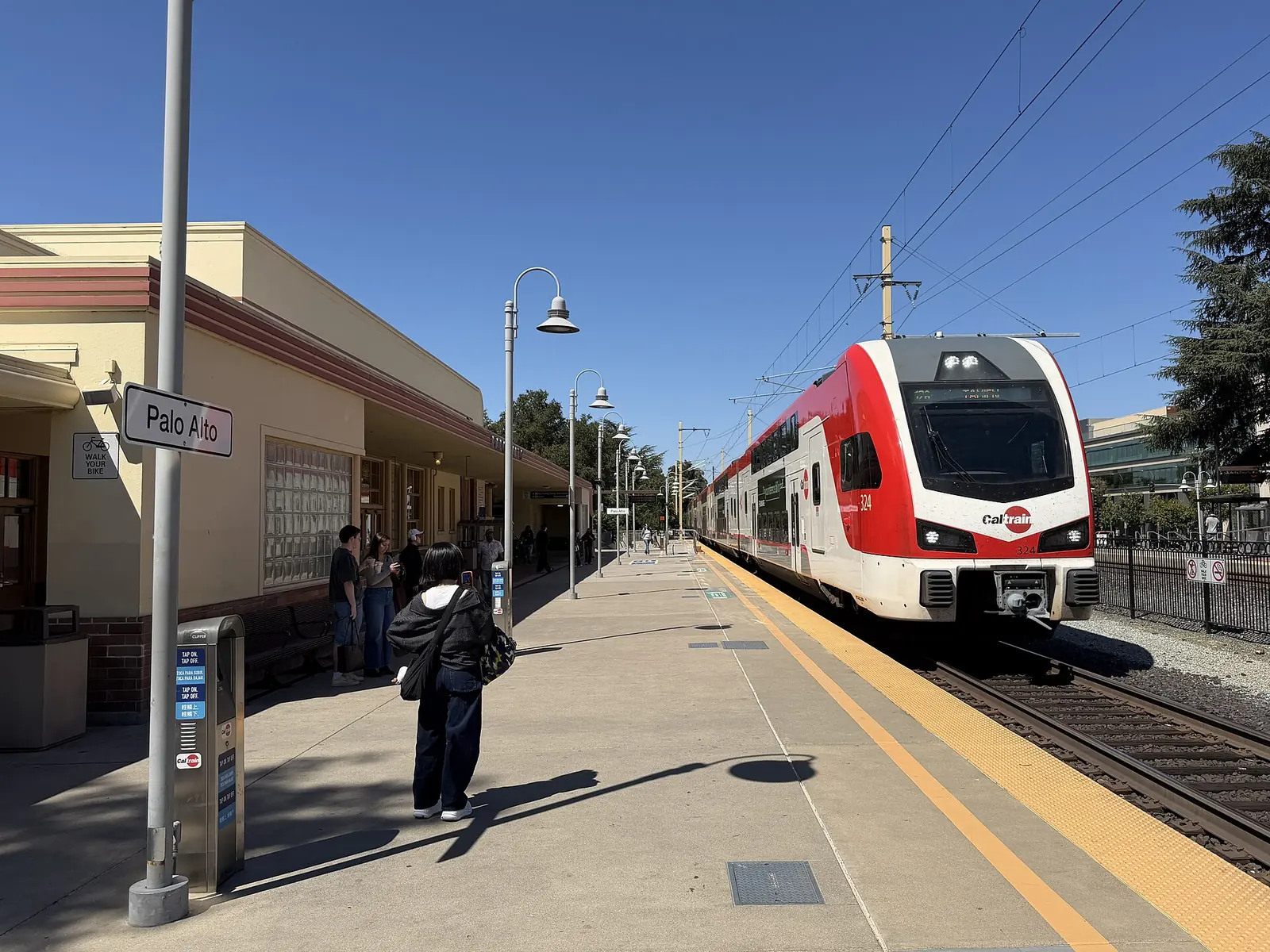
Get off at Palo Alto station. Downtown Palo Alto and University Avenue are right next to it, and the free Marguerite shuttle runs to the Stanford campus. Walking to the main quad takes about 20 to 25 minutes.
Mountain View
Mountain View station is at the end of Castro Street, the city’s main restaurant row, and it connects with VTA light rail.
San Jose
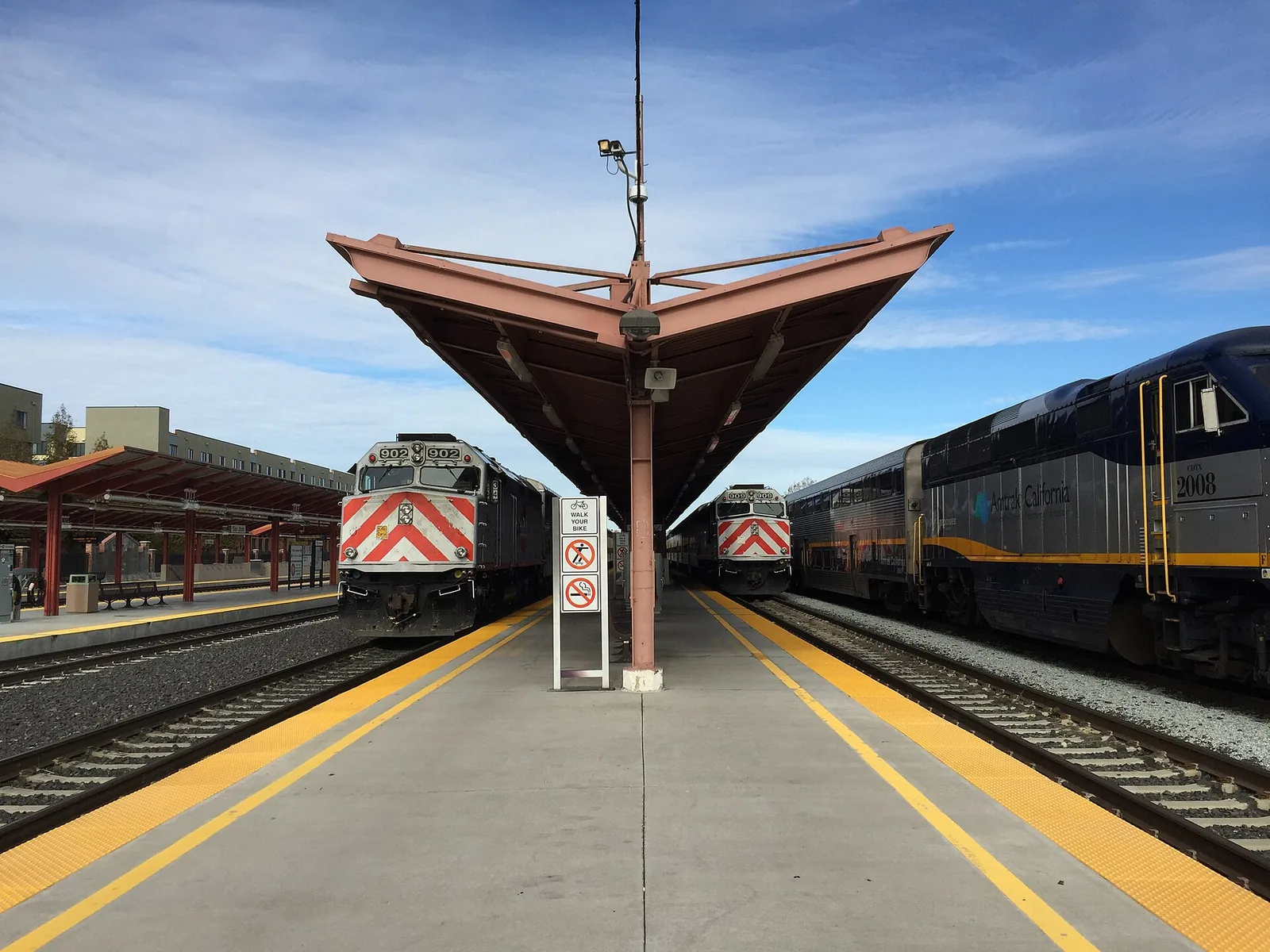
San Jose Diridon station is next to the SAP Center, where the San Jose Sharks play, and a short ride or walk from downtown San Jose. It’s also a stop for Amtrak, ACE and VTA light rail, which makes it a regional hub.
Getting to SFO
Caltrain doesn’t go directly to SFO. The common route is Caltrain to Millbrae, then BART one stop to the airport, and Millbrae has a shared Caltrain and BART station. From most of San Francisco, it’s simpler to take BART all the way. Our SFO to downtown San Francisco and BART guide posts compare the options.
Bikes, accessibility and tips
Bikes on board
Caltrain allows bikes on board in designated bike cars, which are marked on the outside. Space fills up on busy commute trains, so give yourself extra time and follow conductors’ directions. E-bikes and folding bikes have their own rules, so check Caltrain’s bike page before you bring one.
Accessibility
Caltrain’s trains have designated spaces for wheelchairs, and crews can help with boarding where you need a ramp or bridge plate. Ask at the station or contact Caltrain ahead of time if you need assistance.
Tips for riding
- Check you’re on the right platform. At most stations, northbound and southbound trains use separate platforms.
- Check the train number. A limited-stop train may skip your station.
- Tap on and off every time with Clipper or a bank card.
- Expect crowds after Giants games at 4th and King and after events at the SAP Center in San Jose.
- Weekend trips are a cheap day out. A day pass covers unlimited rides within its zones.
Caltrain vs. BART vs. driving
BART and Caltrain don’t cover the same ground. BART serves the East Bay, SFO and the northern Peninsula. Caltrain serves the Peninsula and Silicon Valley down to San Jose. If you’re going to Palo Alto, Mountain View or San Jose, Caltrain is usually faster and less stressful than driving US 101 at rush hour, and it avoids the cost of parking.
Driving makes more sense if you’re heading somewhere far from a station, or traveling as a group on a weekend when parking is easy. For trips beyond the Bay Area, like a day on the coast, our sister site Trip Musing has California road trip ideas.
Frequently asked questions
How much is Caltrain from San Francisco to San Jose?
As of November 2026, an adult one-way fare from San Francisco to San Jose Diridon is $10.75 for four zones. It goes up to $11.50 on January 1, 2027.
Can I use a credit card on Caltrain?
Yes. You can tap a contactless debit or credit card, or a card in Apple Pay or Google Pay, at the Clipper validators on the platform. Tap on before you board and tap off when you get off.
Where is the Caltrain station in San Francisco?
The main station is at 4th and King streets in SoMa, near Oracle Park. San Francisco also has stations at 22nd Street and Bayshore.
How long does Caltrain take from San Francisco to Palo Alto?
About 40 minutes on limited-stop trains and about 50 minutes on trains that stop at every station, based on the current weekday timetable.
Does Caltrain go to SFO?
No. Take Caltrain to Millbrae, then transfer to BART for one stop to SFO. From most of San Francisco, BART alone is easier.
Is Caltrain electric now?
Yes. Electric trains began running between San Francisco and San Jose in September 2024. Service south of San Jose to Gilroy still uses diesel trains.
Photo credits
Featured image: 4300streetcar / Wikimedia Commons, CC BY 4.0; A Caltrain electric train at Hayward Park: Mliu92 / Wikimedia Commons, CC BY-SA 4.0; Palo Alto station: DJTechYT / Wikimedia Commons, CC BY-SA 4.0; San Jose Diridon station: wctaiwan / Wikimedia Commons, CC BY-SA 4.0.