
The Cable Car Museum on Nob Hill is free, fascinating and still working. It is housed in the brick powerhouse and car barn that drives the entire cable car system. From a balcony you watch huge wheels spinning the steel cables that run under the streets, pulling every cable car in the city at a steady 9.5 miles per hour.
Quick answer
The Cable Car Museum on Nob Hill is free and takes 30 to 60 minutes. It sits inside the working powerhouse at Washington and Mason streets, where giant wheels pull the cables for all three cable car lines. You can watch the machinery, see the cables enter the building underground and look at historic cars. The Powell-Mason and Powell-Hyde lines stop right outside.
In this guide
This guide is part of our San Francisco attractions hub. See our cable car guide for riding tips.
What you will see
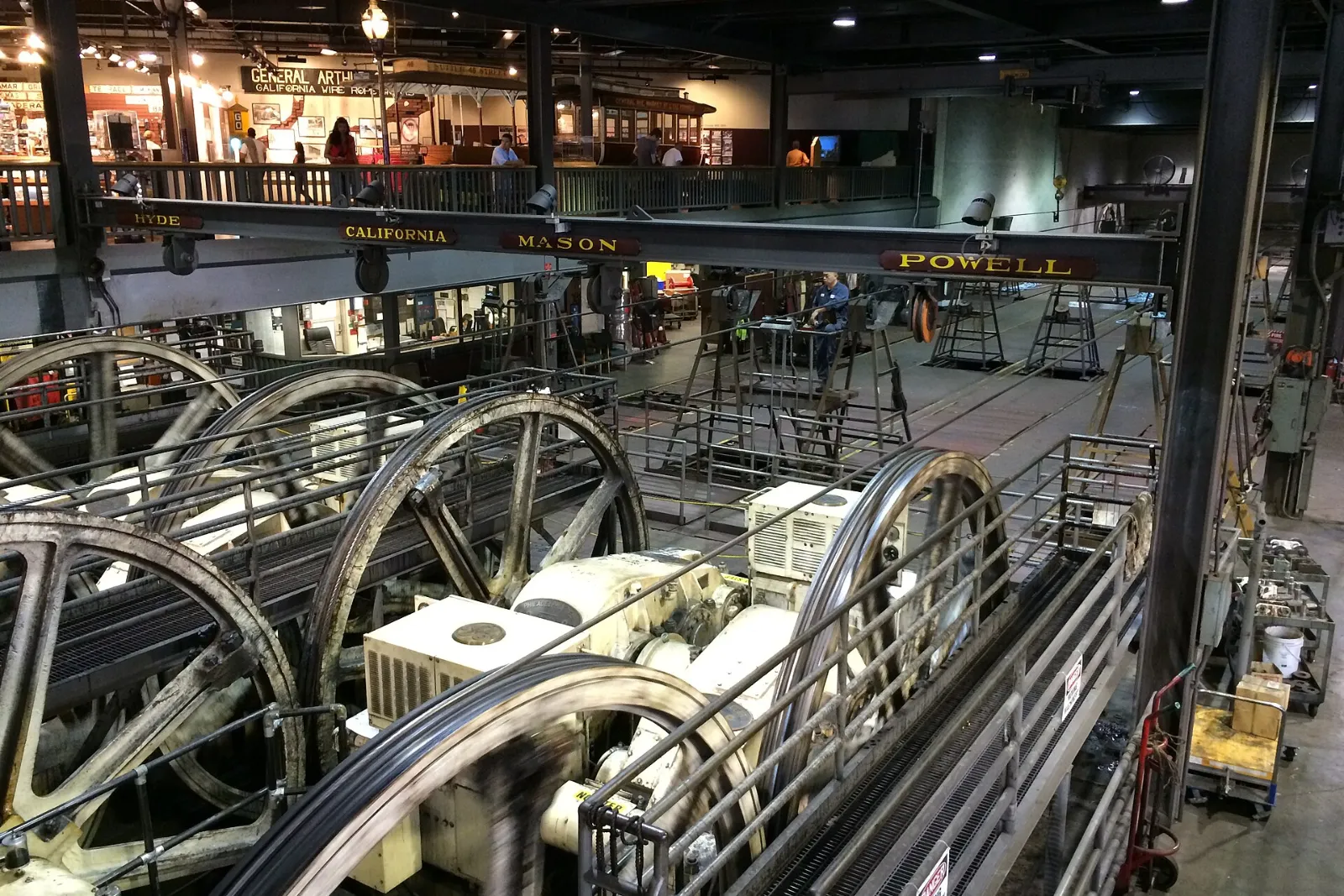
- The winding room: massive sheaves and motors that drive the Powell-Mason, Powell-Hyde and California Street cables.
- The sheave room below the street: look down at where the cables enter the building.
- Historic cable cars, including one of the earliest cars from the Clay Street Hill Railroad of the 1870s.
- Grips, brakes, bells and models that show how a cable car grabs and releases the moving cable.
- Photos and exhibits on the 1906 earthquake and the citizens who saved the cable cars in the 1940s.
A short history
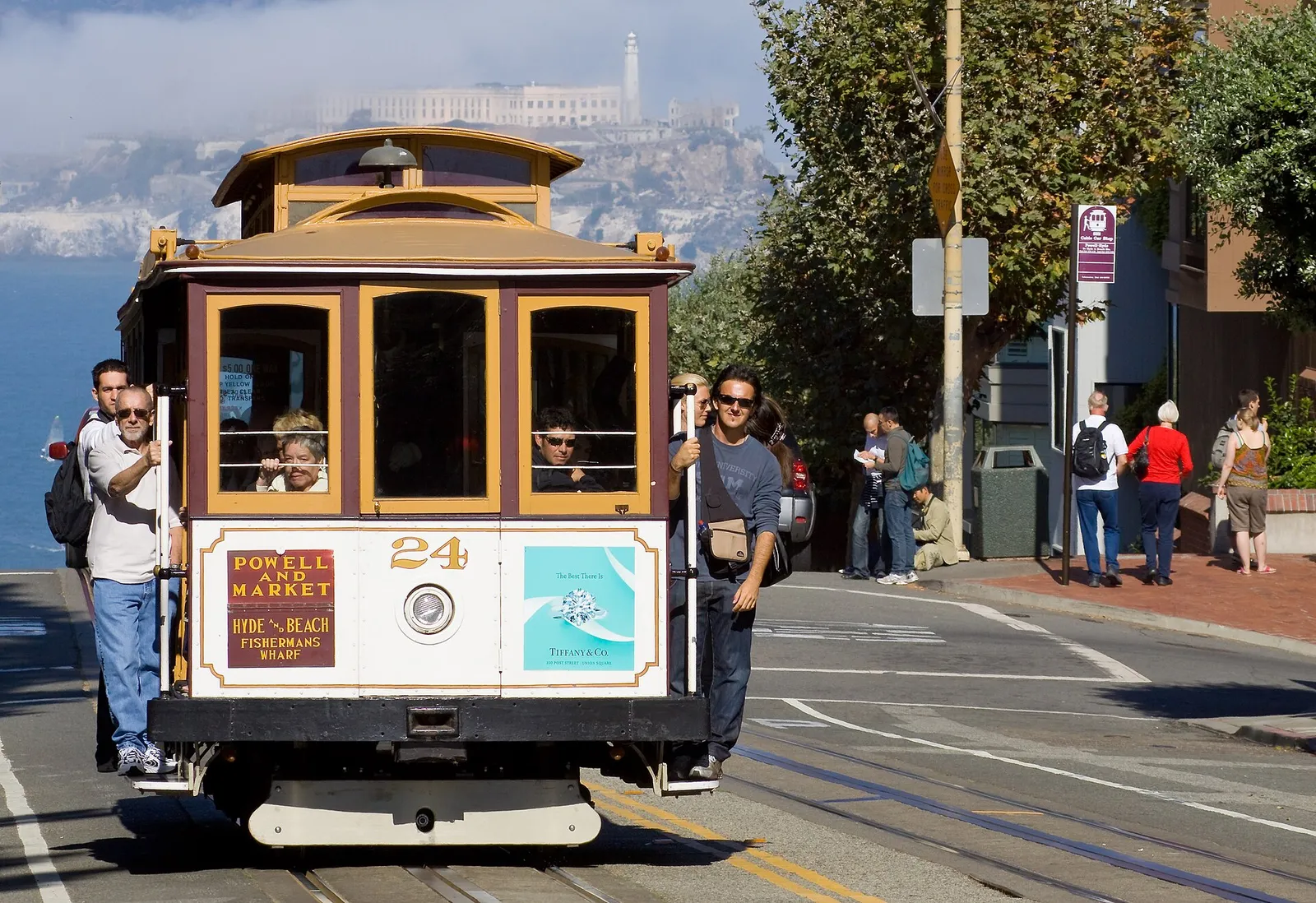
Andrew Hallidie launched the world’s first successful cable car line on Clay Street in 1873, after seeing horses struggle on the steep hills. By the 1890s, cable cars ran on more than 20 lines. Most were replaced by electric streetcars and buses after 1906, but a public campaign led by Friedel Klussmann in 1947 saved the remaining lines, and the cable cars became a National Historic Landmark in 1964.
Hours and admission
Admission is free. The museum is usually open daily except Mondays, from late morning to late afternoon. Check the museum website for current hours. There is a small gift shop with cable car souvenirs.
Getting there
The museum is at Washington and Mason Streets. The Powell-Hyde and Powell-Mason cable cars stop right outside, so it is easy to hop off, visit and catch the next car. It is a short walk from Chinatown and Nob Hill.
Official resources: Cable Car Museum, SFMTA cable cars.
How the cable cars work
San Francisco’s cable cars have no engines. Each car grabs onto a steel cable that runs in a slot under the street, moving at a steady 9.5 miles per hour. To go, the gripman pulls a lever that clamps a grip onto the moving cable. To stop, the gripman lets go and uses brakes, including wooden track brakes and an emergency wedge that jams into the slot.
All of those cables loop back to this building. Electric motors turn the large winding wheels you see from the balcony, and the cables travel out under the streets and back again in an endless loop. When one cable breaks or needs repair, the whole line stops, which is why the museum is also the system’s nerve center.
Look below the street
One of the best parts of the museum is easy to miss. Head downstairs to the sheave room, where you can look into the dark vault under the intersection outside. Here the cables enter the building around big pulleys called sheaves, turn and head back out under the street. It is loud, a little greasy and a great way to understand how the system works.
Saving the cable cars
Cable cars once ran on many lines across the city, but most were replaced by buses and streetcars in the first half of the 20th century. In 1947 the city proposed removing the remaining lines. A citizens’ campaign led by Friedel Klussmann fought back, and voters protected the cable cars in the city charter.
In 1964 the system became a National Historic Landmark, and it is often described as the only moving landmark in the country. The lines and powerhouse were rebuilt in the early 1980s, which is why the museum looks both historic and well maintained.
Historic cars and exhibits
The museum displays historic cars and equipment from the early days of the system, including a car from the Clay Street Hill Railroad, the first cable car line, which Andrew Hallidie opened in 1873. Display cases hold grips, brakes, bells and tools, along with photos of the city before and after the 1906 earthquake and fire, which damaged much of the system.
Signs explain the different kinds of cars. The Powell Street lines use single-ended cars that must be turned around on turntables at each end of the line. The California Street line uses longer, double-ended cars that can run in either direction.
Riding the cable cars after your visit
The museum is a perfect starting point for a ride. The Powell-Mason and Powell-Hyde lines pass right outside, and the California Street line runs a few blocks south. Riding from here, rather than from the busy turnaround at Powell and Market, often means shorter waits. Stand on the running boards if you like, but hold on tight on the hills.
Fares are paid on board or with a Clipper card or the MuniMobile app, and a Muni visitor passport includes unlimited cable car rides. Our Muni guide has current fare details.
Combining the museum with nearby sights
The museum sits on the edge of Nob Hill, so it is easy to combine with Grace Cathedral, Huntington Park and the grand hotels at the top of the hill. Chinatown is a few blocks downhill to the east, and North Beach is a short walk north. Russian Hill and Lombard Street are a quick ride away on the Powell-Hyde line.
Visiting with kids
Kids tend to love the museum because the machinery is big, loud and moving. It is a short visit, so it works well between bigger stops. The balcony has railings, but the stairs to the sheave room are steep, so hold small hands. For more ideas, see our San Francisco with kids guide.
Frequently asked questions
Is the Cable Car Museum free?
Yes. Admission is free.
How long do you need at the Cable Car Museum?
About 30 to 45 minutes.
How fast do San Francisco cable cars go?
The cables move at a steady 9.5 miles per hour.
Is the Cable Car Museum open on Mondays?
It is usually closed on Mondays. Check current hours before visiting.
Who invented the San Francisco cable car?
Andrew Hallidie is credited with launching the first successful cable car line on Clay Street in 1873. He was inspired by seeing horses struggle on the city’s steep hills.
How many cable car lines are there in San Francisco?
Three lines run today: Powell-Hyde, Powell-Mason and California Street. All three are pulled by cables driven from the powerhouse at the Cable Car Museum.
Can you ride a cable car to the Cable Car Museum?
Yes. The Powell-Mason and Powell-Hyde lines stop at Washington and Mason streets, right outside the museum.
Is the Cable Car Museum good for kids?
Yes. The huge spinning wheels and the underground sheave room are fun for children, and the visit is short enough to keep their attention. Admission is free.
Photo credits
Featured image: Jaredzimmerman (WMF) / Wikimedia Commons, CC BY-SA 4.0; A short history: Christian Mehlführer, User:Chmehl / Wikimedia Commons, CC BY 3.0.