
San Francisco’s Chinatown is the oldest Chinatown in North America and one of the largest Chinese communities outside Asia. It was founded in the 1840s and rebuilt after the 1906 earthquake, and it still packs markets, temples, bakeries, family associations and tea shops into about 24 blocks between Union Square and North Beach.
In this guide
This guide is part of our San Francisco neighborhood guide. For food, see our best restaurants in San Francisco.
The Dragon Gate and Grant Avenue
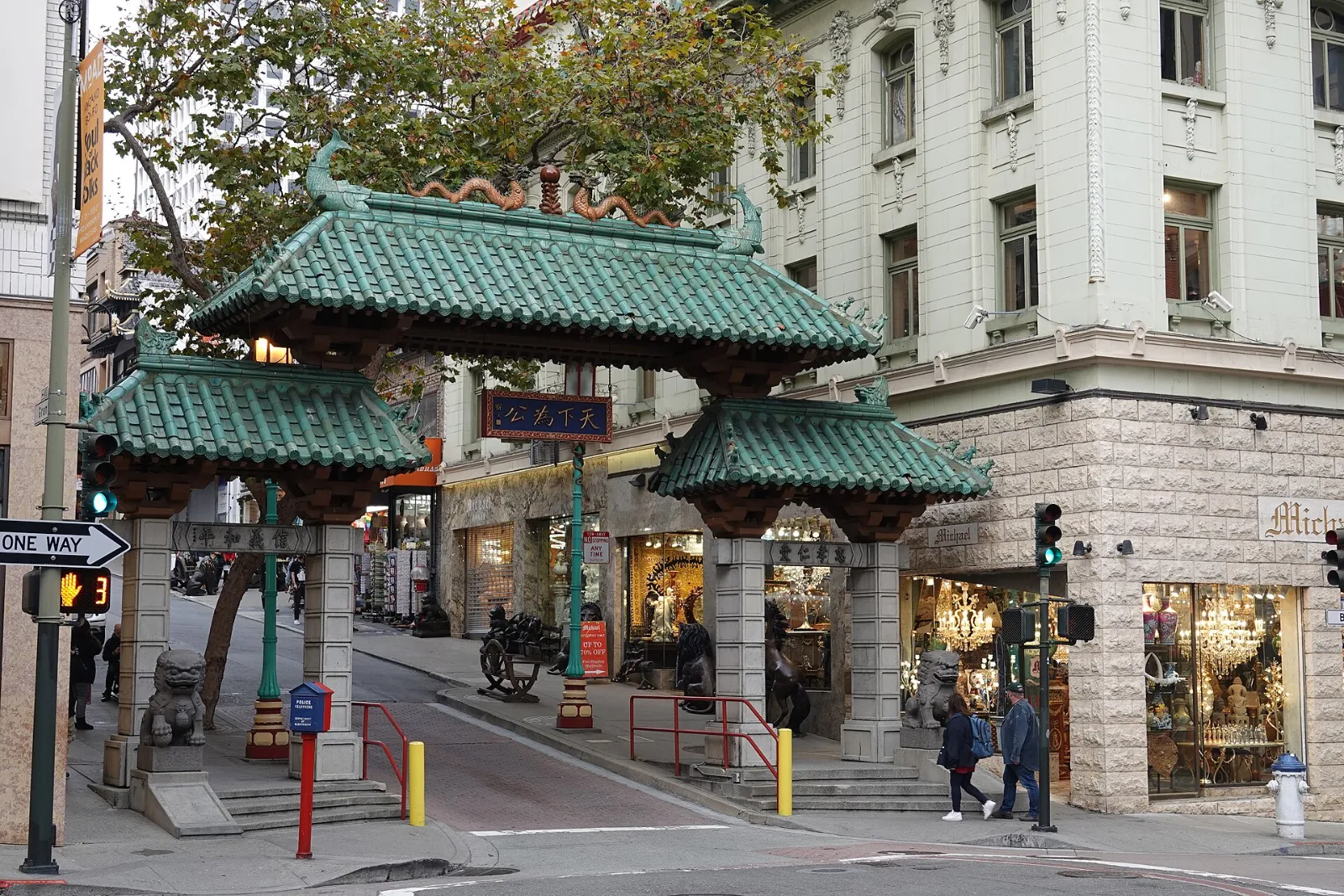
Most visitors enter through the Dragon Gate at Grant Avenue and Bush Street, a green-tiled gateway built in 1970. Grant Avenue is the main tourist street, lined with lanterns, souvenir shops, jewelry stores and restaurants. It is the oldest street in the city.
Walk north along Grant and look up. Many buildings have pagoda-style roofs and painted balconies, a style chosen when the neighborhood was rebuilt after 1906.
Stockton Street, where locals shop
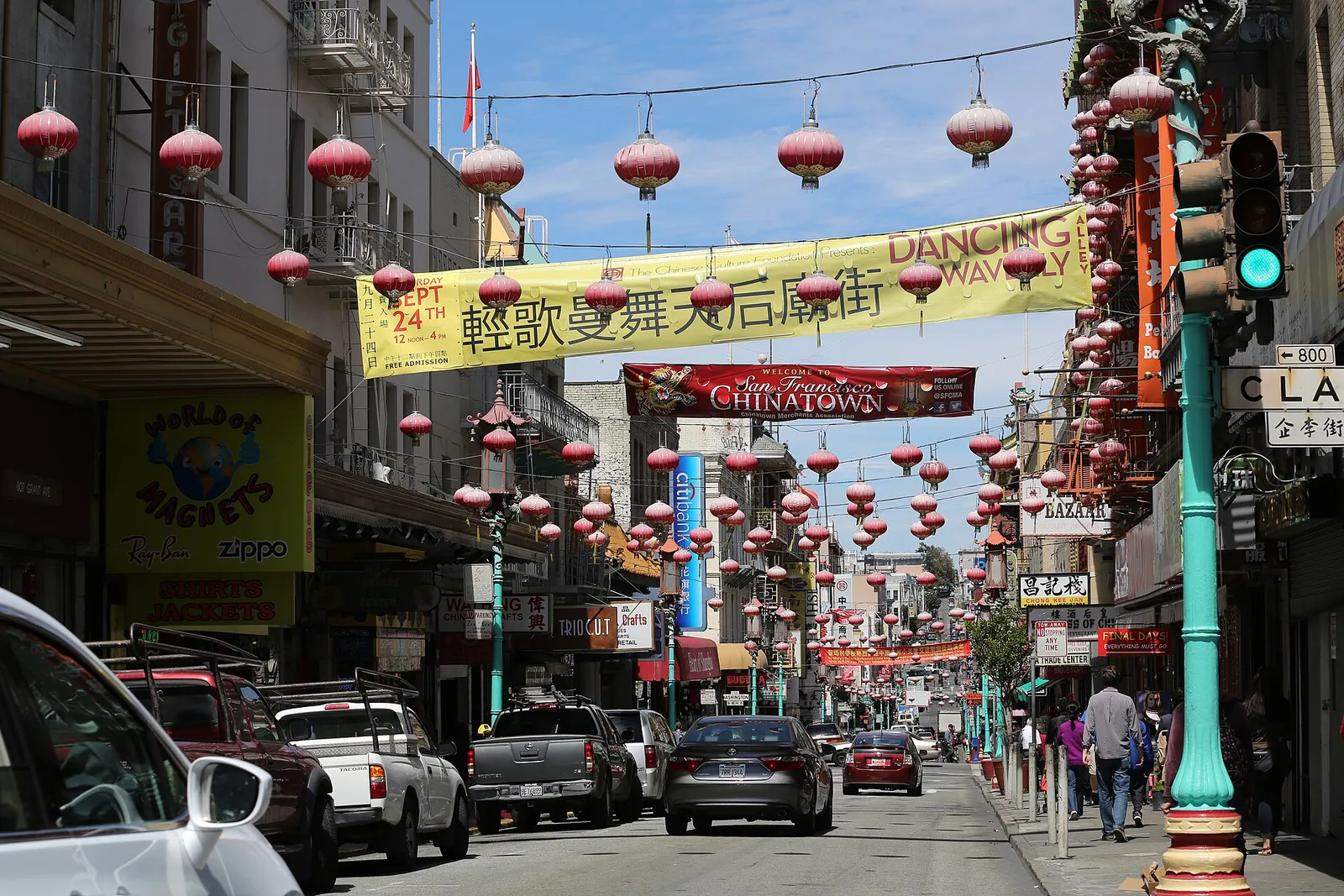
One block west, Stockton Street is the everyday heart of Chinatown. Mornings are busy with people buying produce, live seafood, roast duck and dried goods. It is crowded and lively, and a good contrast with Grant Avenue.
Alleys, temples and history
- Waverly Place: painted balconies and temples on the upper floors, including the Tin How Temple, one of the oldest Chinese temples in the US.
- Ross Alley: home to the Golden Gate Fortune Cookie Factory, where you can watch cookies being folded by hand.
- Portsmouth Square: the neighborhood’s living room, where elders play cards and Chinese chess.
- Chinese Historical Society of America: a small museum on Clay Street about Chinese American history.
- Old St. Mary’s Cathedral: the city’s first cathedral, from 1854, at Grant and California.
What to eat
Chinatown is the place for a classic dim sum brunch, Cantonese bakery buns, egg tarts and roast meats. Golden Gate Bakery on Grant Avenue is famous for egg tarts, though it keeps irregular hours. Many restaurants are cash-friendly and casual, and lines form at popular dim sum spots on weekends.
For more ideas, see our guide to the best dim sum in San Francisco.
Getting there
The Central Subway’s Chinatown–Rose Pak station on Stockton Street links Chinatown with Union Square and SoMa. The California Street cable car runs along the edge of the neighborhood, and the 30 and 45 buses run along Stockton. Parking is tight, so the Portsmouth Square garage is the easiest option if you drive.
Tips for visiting
Go in the morning for the markets and the most local feel. Weekends are the busiest. The neighborhood is easy to combine with North Beach to the north and Union Square to the south. If you visit around Lunar New Year, see our Lunar New Year parade guide.
Official resources: San Francisco Chinatown, Chinese Historical Society of America.
Frequently asked questions
Is San Francisco Chinatown worth visiting?
Yes. It is one of the city’s most historic neighborhoods and is free to explore on foot.
How long do you need in Chinatown?
Two to three hours is enough for a walk, a visit to an alley or temple and a meal.
What is the best street in Chinatown?
Grant Avenue for sightseeing and shops, and Stockton Street for markets and everyday life.
Is Chinatown safe at night?
The main streets are busy into the evening. Many shops close early, so it is quieter after dark.
Photo credits
Featured image: Ilkka Simomaa / Wikimedia Commons, CC BY 4.0; Stockton Street, where locals shop: Tobias Kleinlercher / Wikimedia Commons, CC BY-SA 3.0.